Day 3 · Response and judgment
When Things Go Wrong
Incidents are handled best by monitors who stay calm and act quickly.
Narration Draft: Day 3 is about what happens when the normal flow of the park gets interrupted. A guest gets hurt. A parent gets upset. A child is missing. The power goes out. Weather becomes severe. These situations can feel stressful, but the expectations are still clear. Stay calm, protect the area, call for help, follow your role, and keep communicating. Attraction Monitors are not expected to handle every emergency alone. You are expected to recognize when something is wrong and take the correct first steps. Your behavior matters because guests will look to employees for cues. If you panic, they panic. If you act calmly and clearly, you help keep control.
Injury response
Your First Priority
Protect everyone else while help is on the way.
Do not let one incident become two.
Narration Draft: When a guest is injured, your instinct may be to focus only on that guest. Helping them matters, but your first responsibility as the Attraction Monitor is to protect everyone else from getting hurt too. Clear the immediate area. Stop nearby jumping. Keep other guests from crowding, bouncing near the injured person, or stepping into the response area. Then call for a Supervisor or Manager. If you are not the person assigned to provide first aid, your role is to keep the attraction controlled. One injury can become several if other guests keep playing around the scene. Your calm, quick area control is one of the most important things you can do.
Control the scene
Clear the Area
Space gives the injured guest privacy and prevents secondary injuries.
1Stop activity
2Move guests away
3Call management
Narration Draft: Clearing the area should happen quickly and respectfully. Use your whistle or voice to stop nearby activity, then direct guests away from the injured person. You do not need to create panic. Use clear language: “Everyone move back for me. Please clear this area.” If the injured guest is on a trampoline, do not allow guests to continue jumping on adjacent squares. If the area involves a landing zone, lane, or obstacle, stop use until leadership gives direction. Once the area is controlled, call management and remain focused on preventing additional problems. Clearing the area is not just about space. It is about control, privacy, and safety.
Stay assigned unless directed
Do Not Rubber-Neck
Staring at an incident can create the next incident.
Wrong
Employees and guests crowding around the injury, watching instead of monitoring their own areas.
Right
Assigned responders help the injured guest while other monitors keep their attractions controlled.
Narration Draft: Rubber-necking happens when everyone stops what they are doing to stare at an incident. It is common, and it is dangerous. If you are not assigned to respond, keep monitoring your area. Guests may also try to look, crowd, or move toward the scene. Redirect them calmly and keep your attraction controlled. The park does not stop needing supervision because one area has a problem. In fact, the risk can increase because attention shifts away from active guests. If a Manager asks you to assist, assist. If not, stay focused on your assigned court and prevent the next incident from happening.
Communication standard
Calling for Help
Use the walkie early, clearly, and professionally.
1State location
2State issue
3Request support
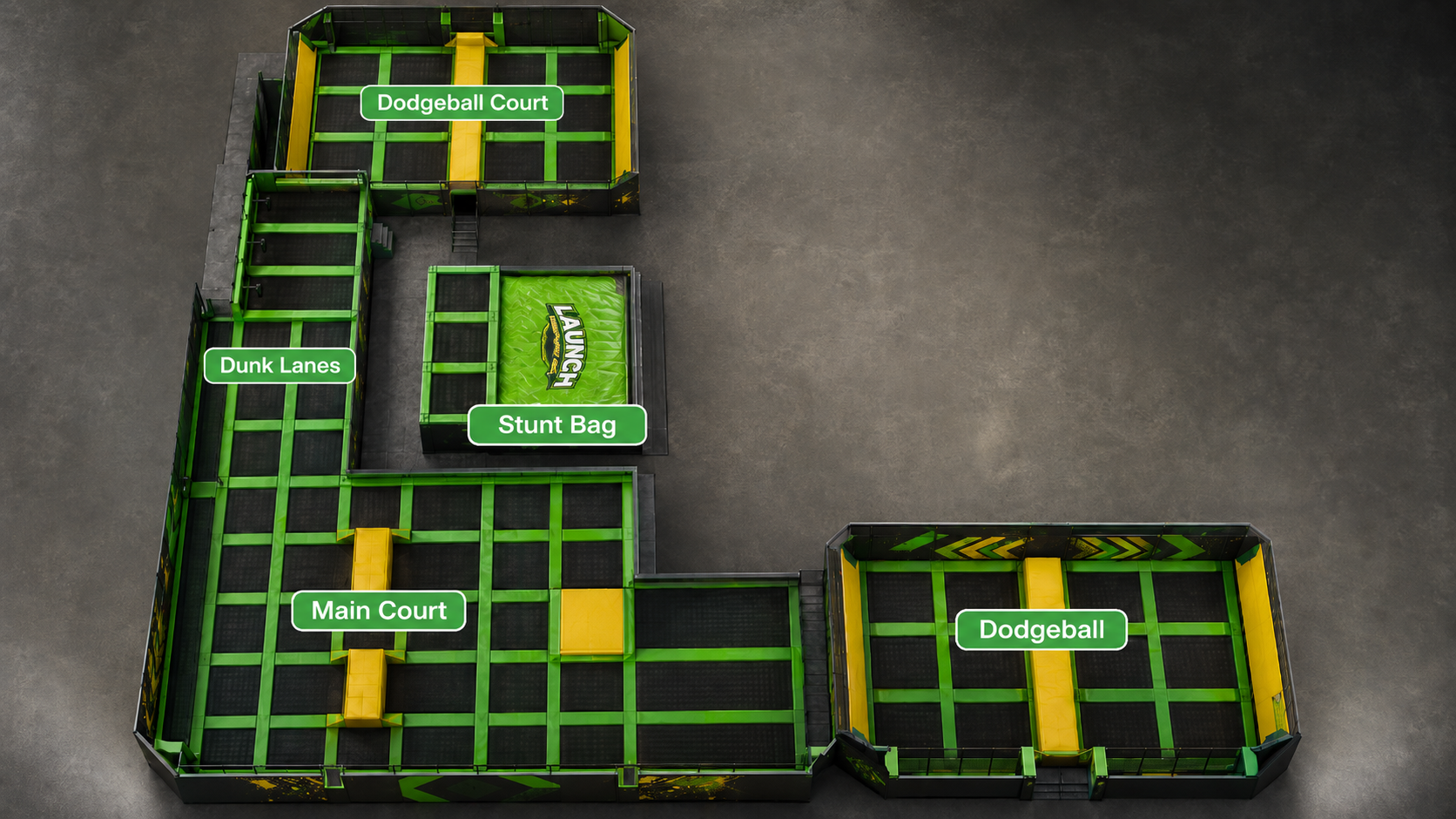
Narration Draft: When you call for help, be clear and brief. Start with your location, then state the issue, then say what you need. For example: “Manager to Main Court for an injured guest,” or “Supervisor to Dodgeball for a guest refusing rules.” If the situation is serious, use the emergency language your park has trained you to use, such as Code Blue with the attraction location. Do not give a long story over the walkie while the court is still active. Get support moving first. Then provide details when leadership arrives. Clear radio communication saves time and helps the right people respond to the right place.
Emergency callout
Code Blue
Serious injuries require immediate leadership response.
- Use when the situation appears serious
- State Code Blue and the location
- Clear the area and wait for leadership direction
Code Blue tells leadership the response is urgent.
Narration Draft: Code Blue should be used when a serious injury or serious medical situation requires immediate leadership response. The exact wording may vary by park, but the concept is the same: leadership needs to know this is urgent and where to go. A strong call is short and clear, such as “Code Blue, Main Court.” After the call, control the surrounding area. Keep guests away, do not move the injured guest unless directed by trained leadership or emergency personnel, and do not step onto an unsafe trampoline bed or landing area if doing so creates additional risk. Your job is to get the right help there quickly and keep the scene controlled.
Calm and document
Minor Injury Response
Small injuries still need professional handling.
- Call a Supervisor or Manager
- Allow the guest to help themselves when appropriate
- Follow park reporting requirements
Minor does not mean informal.
Narration Draft: Not every injury is a Code Blue. A guest may need an ice pack, a bandage, or a moment to sit down. Even minor injuries should still be handled professionally. Call a Supervisor or Manager according to your park procedure. If the guest is able to help themselves, allow them to do so rather than applying treatment yourself unless you are trained and directed. Keep the area calm and make sure the guest is not left in a place where other participants may collide with them. Minor injuries may still require an incident report, especially if the injury happened on an attraction. When in doubt, call leadership and document the situation properly.
Do not move the guest
Serious Injury Response
Do less physically, but control more carefully.
- Call management immediately
- Do not move the injured guest unless directed by qualified responders
- Clear the area and keep guests back
Area control is a critical response role.
Narration Draft: For a serious injury, your response should become more controlled, not more chaotic. Call leadership immediately. Do not move the injured guest unless trained leadership or emergency personnel directs it, or unless there is an immediate life safety reason. Clear the area and keep other guests away. If the guest is on a trampoline or landing surface, stop nearby activity so nobody bounces or lands near them. If emergency services are called, leadership may assign someone to meet them at the entrance. Your role may be to keep the route clear, manage nearby guests, or return to monitoring once coverage is in place. Follow direction and stay calm.
Sanitation before reopening
Biohazards Close the Area
Blood, vomit, urine, fecal matter, and similar hazards require immediate control.
If bodily fluids are involved, the area stays closed until properly cleaned.
Narration Draft: Biohazards must be taken seriously. If there is blood, vomit, urine, fecal matter, or any other bodily fluid on or near an attraction, clear the area and call management. Do not allow guests to continue using that section while the hazard is present. The area must remain closed until proper sanitation has occurred according to park procedure. This is not just about appearance. It is about guest safety, employee safety, and preventing exposure. Keep guests back, communicate clearly, and do not reopen the area simply because the crowd wants to continue. Leadership must determine when the area is ready to use again.
Help without overstepping
First Aid Boundaries
Know your role and do not exceed your training.
Wrong
Diagnosing injuries, moving guests unnecessarily, applying treatment beyond your training, or promising outcomes.
Right
Call trained leadership, keep the guest comfortable, clear the area, and follow directions.
Narration Draft: Attraction Monitors want to help, and that is good. But helping does not mean doing things you are not trained or authorized to do. Do not diagnose injuries. Do not move an injured guest unless directed by qualified responders or leadership. Do not apply treatment beyond your training. Do not promise a parent that someone is fine. Your role is to call trained leadership, control the area, keep the guest as comfortable as possible, and provide accurate information about what happened. If you are CPR or First Aid certified and your park allows you to assist, follow that training and park direction. If not, support the response without exceeding your role.
Details protect the park
Incident Reports Matter
Bad information creates problems after the guest leaves.
- Use accurate names, times, and locations
- Describe what happened clearly
- Management attaches waivers and video as required
A complete report helps leadership follow up correctly.
Narration Draft: Incident reports are not busywork. They become the record of what happened after the moment has passed. Incomplete or inaccurate information can create major problems for management, insurance, and guest follow-up. Depending on your park’s procedure, management may complete the report, but Attraction Monitors may still need to provide details. Be factual. What attraction? What time? What did you see? What rule, if any, was involved? What did the guest say? Avoid guessing or adding opinions. Good reports help leadership attach the correct waiver, pull the correct video, and understand whether additional coaching, maintenance, or follow-up is needed.
Guest escalation
The Angry Parent
Stay professional and bring in leadership early.
ScenarioA parent is yelling after you corrected their child.
They say you embarrassed their child and they want your name. What should you do?
Argue and defend yourself
Walk away without saying anything
Stay calm, explain safety briefly, and call a Manager
Tell them the rules are not your problem
Narration Draft: Parent escalation can feel personal, but it needs to stay professional. If a parent becomes upset after you correct a child, do not argue. Keep your voice calm, explain the safety reason briefly, and call a Manager. For example: “I understand. I stopped the running because it can cause collisions. I am going to have a Manager come speak with you.” That response protects the guest relationship and protects you from getting pulled into a debate while your court is still active. If the parent becomes loud, rude, or confrontational, call management immediately. Your job is to maintain safety and professionalism, not win the argument.
Control the pattern
The Repeat Rule Breaker
Repeated unsafe behavior requires escalation.
ScenarioSame guest, same rule, fourth time.
You have corrected them several times and they keep returning to the behavior. What now?
Keep repeating yourself forever
Ignore it because you tried
Call leadership and explain the repeated behavior
Remove them physically from the court
Narration Draft: Repeated rule breaking is different from a one-time mistake. The first correction may be simple education. The second correction may be a clearer warning. But if the guest continues, the pattern needs leadership support. Call a Supervisor or Manager and explain what has happened: “I have corrected this guest multiple times for running across Main Court, and they are continuing.” Do not physically remove a guest. Do not argue endlessly. Do not ignore it because you already tried. Repeated unsafe behavior affects everyone around that guest, and leadership needs the opportunity to step in before someone gets hurt or the situation becomes a customer service problem.
Emergency awareness
Missing Child / Code Adam
Act quickly, stay calm, and follow the park’s missing child procedure.
1Get description
2Notify leadership
3Monitor exits and assigned areas
Narration Draft: A missing child situation requires immediate attention and calm communication. If a parent reports a missing child, get leadership involved right away and follow your park’s Code Adam or missing child procedure. Important details include the child’s name, age, clothing, hair color, last known location, and any other identifying information. Employees may be assigned to monitor exits, search areas, or remain at their attractions. Do not create panic, but do treat the report seriously. If you are assigned to a court during the response, stay alert. A missing child may be nearby, scared, or moving through the building. Follow leadership direction and communicate anything relevant immediately.
Emergency awareness
Fire Emergency
Evacuation requires urgency without chaos.
Narration Draft: During a fire emergency, follow your park’s evacuation procedures and leadership direction. Attraction Monitors may need to stop attractions, direct guests off equipment, help clear restrooms or assigned areas if directed, and guide guests toward the proper exits. Do not let guests continue jumping or playing once evacuation is underway. Do not re-enter unsafe areas or allow guests back inside until the all-clear is given by the appropriate authority. Your tone matters. Guests, especially children, may react to the way employees behave. Move with urgency, use clear instructions, and avoid shouting in a way that creates panic. The goal is to get everyone out safely and keep exits controlled.
Power loss response
Utility Outage
Darkness changes the risk immediately.
ScenarioThe power goes out during jump time.
Some guests are still on trampolines and visibility is reduced. What should happen first?
Let guests keep jumping if they want
Use walkies and staff direction to evacuate attractions calmly
Wait to see if power returns before acting
Open more doors for new guests
Narration Draft: A utility outage changes the safety conditions immediately. If visibility is reduced or attractions lose power, guests should be calmly directed off trampolines and elevated or active attractions according to park procedure. Use walkies to communicate with staff and follow leadership direction. Help guests move toward areas with better visibility if directed. Do not allow new guests to enter active attractions during the outage. Do not let guests continue jumping simply because they still have time left. Once power returns, attractions and the building need to be checked for anything out of place or damaged before normal activity resumes. Calm control is the priority.
Emergency awareness
Severe Weather
Guests follow employee direction during uncertain moments.
Narration Draft: Severe weather procedures depend on your location and the type of emergency, but the Attraction Monitor mindset stays the same: follow leadership direction, move guests calmly, and keep attractions controlled. If the park moves guests to a safer area, help direct traffic and prevent children from returning to attractions. If guests are confused or anxious, use calm, simple instructions. Do not speculate about what is happening outside or make promises you cannot guarantee. In severe weather, employees need to act as one team. Listen for radio instructions, help where assigned, and maintain awareness of the guests around you. Your calm presence helps keep the building under control.
Emergency awareness
Suspicious Package or Threat
Do not investigate beyond your role.
Do not touch. Clear the area. Call leadership. Follow emergency direction.
Narration Draft: If you notice a suspicious package, threat, or anything that feels seriously unsafe, do not investigate it yourself and do not touch it. Clear the immediate area if directed, notify leadership immediately, and follow the emergency procedure for your park. This is not a situation where curiosity helps. Your role is to keep guests away, communicate what you saw, and follow direction from leadership or emergency responders. The same standard applies to any serious security concern. Stay calm, avoid spreading rumors, and do not create unnecessary panic. Bring the information to the correct people quickly so the park can respond appropriately.
During pressure
Emergency Communication
Short, clear communication beats long explanations.
1Where are you?
2What happened?
3What do you need?
Narration Draft: During an emergency or fast-moving situation, communication should be short, clear, and useful. Start with where you are. Then say what happened. Then say what you need. “Manager to Launch Pad for an injured guest.” “Code Blue, Dodgeball.” “Supervisor to Ninja Course for a guest refusing rules.” Long explanations over the walkie can slow down the response and block others from communicating. Details can come after help is moving. Also remember that guests can often hear your tone, even if they cannot hear the walkie. Speak calmly. Avoid panic language. Clear communication helps leadership respond faster and helps everyone else understand that the situation is being handled.
Professional composure
Leadership in the Moment
You may be new, but guests still read your behavior.
- Stay calm
- Give clear directions
- Keep your assigned area controlled
Control starts with composure.
Narration Draft: Attraction Monitors may not be managers, but in the moment, guests still look to you as a Launch employee. Your behavior tells them whether the situation is controlled. If you look panicked, distracted, or unsure, guests may become more anxious. If you stay calm, give clear directions, and communicate with leadership, you help keep the environment stable. Leadership in this role does not mean making decisions outside your authority. It means doing your part with confidence. Control your area. Call for help. Follow direction. Speak professionally. Keep guests moving where they need to go. Those actions matter, especially when the park is busy or something unexpected happens.
Graduation standard
Final Readiness Challenge
A trained Attraction Monitor sees risk, acts early, and communicates clearly.
ScenarioBusy Saturday. Three problems at once.
A guest is injured on Main Court, Dodgeball is getting rough, and a parent is upset nearby. What mindset should guide you?
Handle whatever is loudest first
Stay calm, control your assigned area, call support, and follow leadership direction
Leave your court to watch the injury
Wait until a Manager notices everything
Narration Draft: This final scenario is what Attraction Monitoring often feels like on a busy day. Several things may happen at once, and not everything will wait politely for you to finish the first task. The correct mindset is to stay calm, control your assigned area, call for support, and follow leadership direction. Do not abandon one active attraction because something loud is happening somewhere else unless you are directed and covered. Do not ignore unsafe play because a parent is upset. Do not wait silently and hope management notices. Strong Attraction Monitors communicate early and keep acting. That is the difference between someone who is simply present on the floor and someone who is truly protecting the park.
Next step: final hands-on validation
Ready for the Floor
The screen is done. The real test is what you do during the shift.
- Print the Day 3 checklist
- Complete incident and emergency role-play
- Take the final exam
Training becomes performance.
Narration Draft: You have now completed the online portion of Attraction Monitor Training. The final step is to prove the skills on the floor with your trainer. You should be able to explain your role during injuries, clear an area, call for help over the walkie, describe when to use Code Blue, respond professionally to upset guests or parents, and follow basic emergency direction. The exam will test judgment, not trick questions. The checklist will validate observable skills, not memorized wording. A successful Attraction Monitor is active, professional, safety-focused, and consistent. Print the Day 3 checklist, complete the hands-on training shift, and then take the final exam.