Commitment
Follow approved recipes, complete required checks, and finish the task—even when Krave is busy.


Safe food. Consistent preparation. One Launch standard.

Krave is part of the experience guests take home.

Seven values. One standard. Every Krave shift.
Each Core Value should be visible in the way we work in Krave.
Follow approved recipes, complete required checks, and finish the task—even when Krave is busy.
Use proper food handling, keep work areas clean, and address hazards immediately.
Communicate honestly and speak up when an ingredient, mistake, or standard needs attention.
Take pride in creating an experience guests enjoy and food that contributes to an awesome memory.
Communicate, help where needed, and safely support teammates who need assistance.
Accept coaching, ask questions, and practice until the task is performed correctly.
Use what you learn to become more capable, consistent, and ready for greater responsibility.
Values become real through the choices we make.
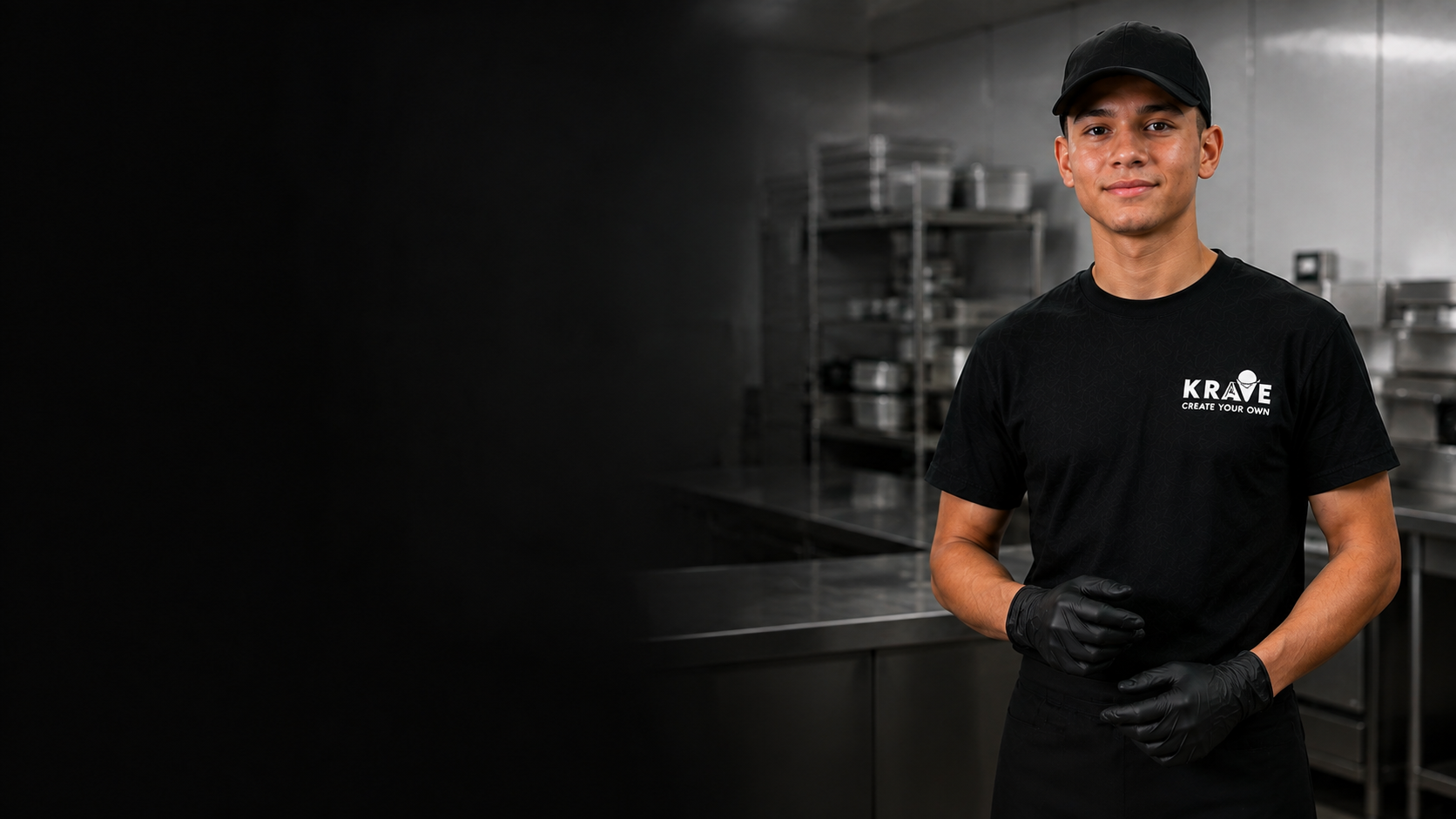
Arrive ready. Speak up early. Protect every order.
Food safety begins before you touch food or enter the preparation process.
Vomiting or diarrhea · Yellow skin or eyes · Sore throat with fever · Infected wound
A cut or injury on the hand or wrist requires a clean, water-resistant bandage and a single-use glove.
Persistent coughing, sneezing, or drainage can contaminate food.
Speaking up protects guests, teammates, and every order leaving Krave.
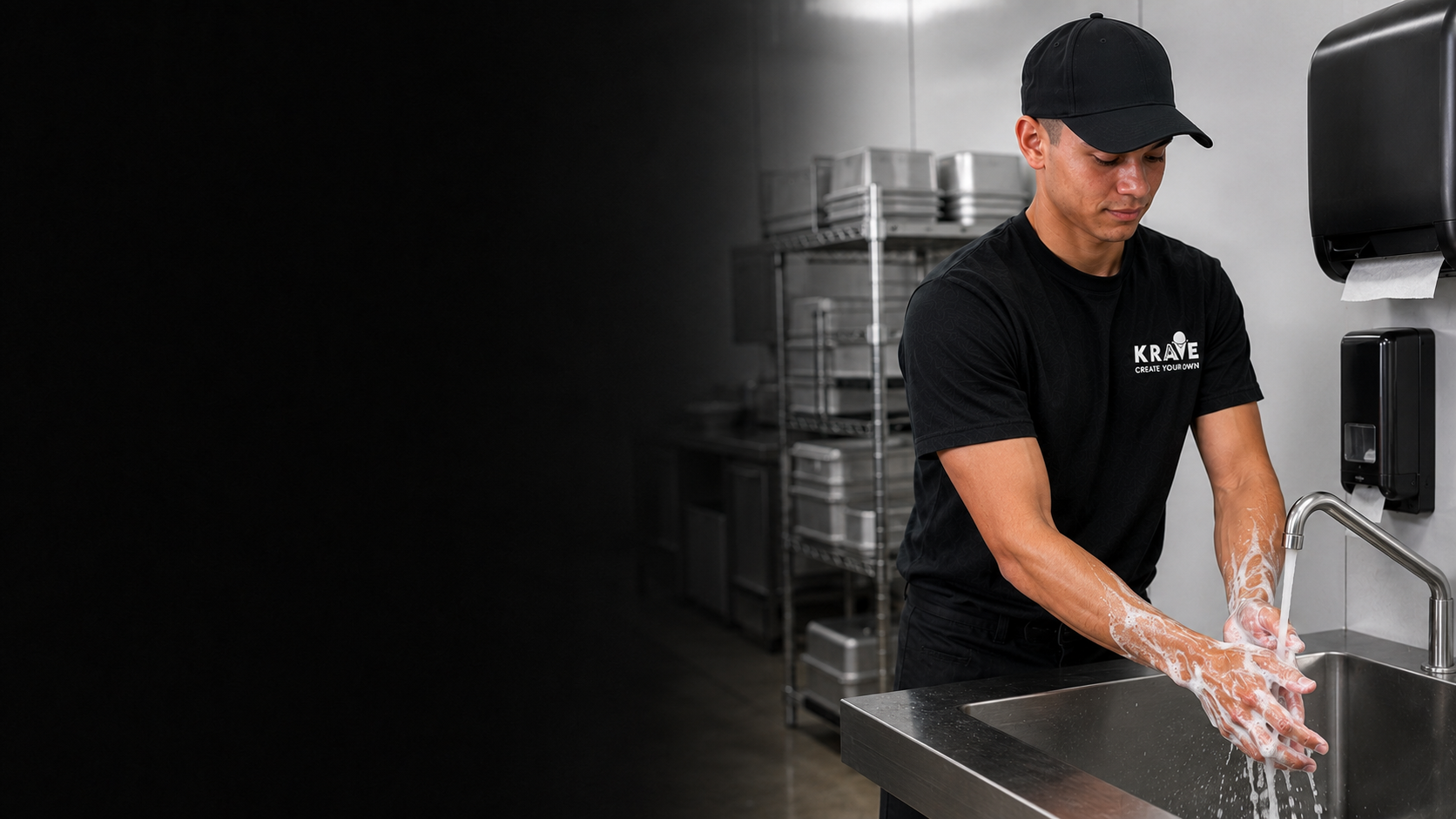
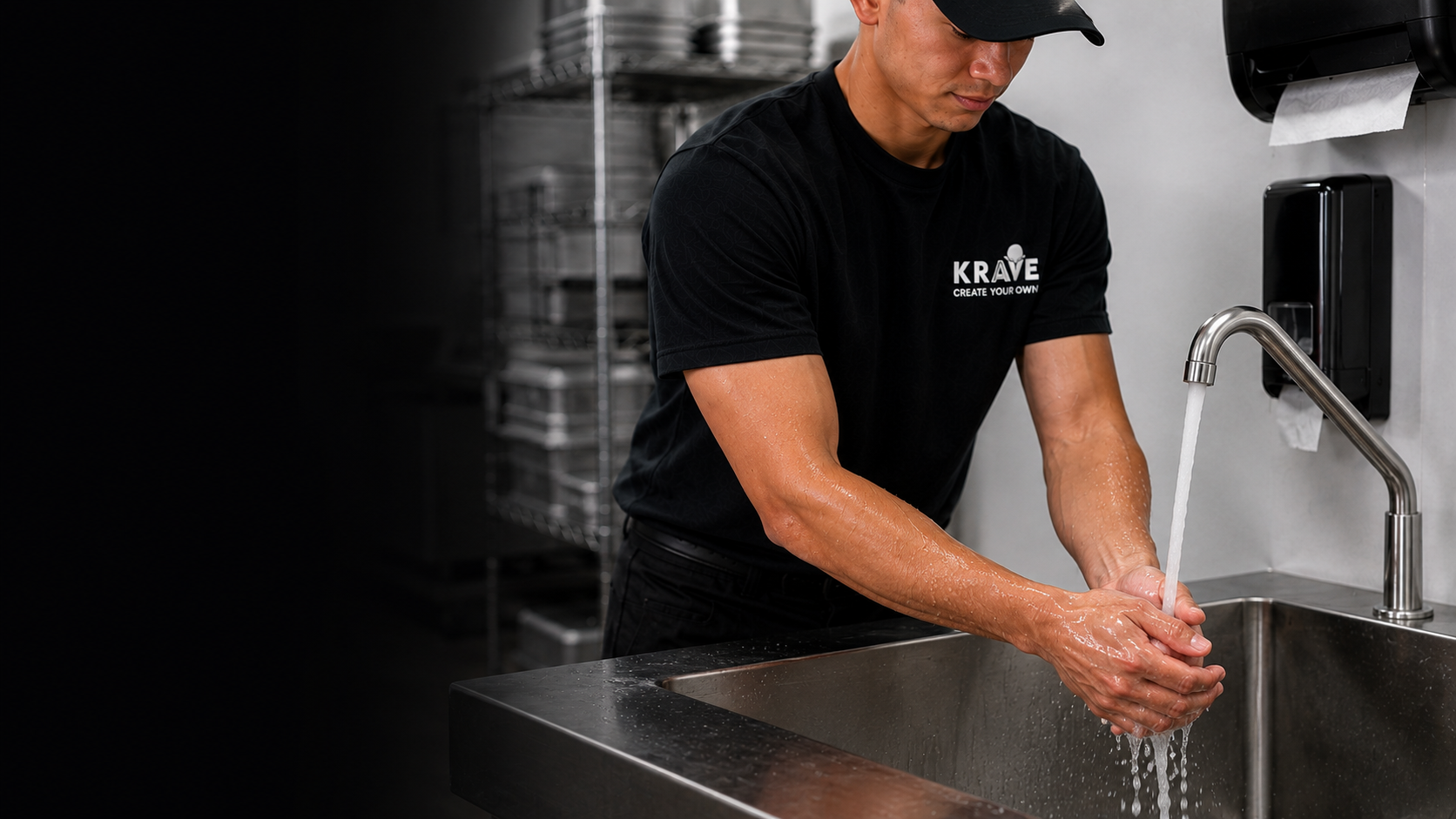
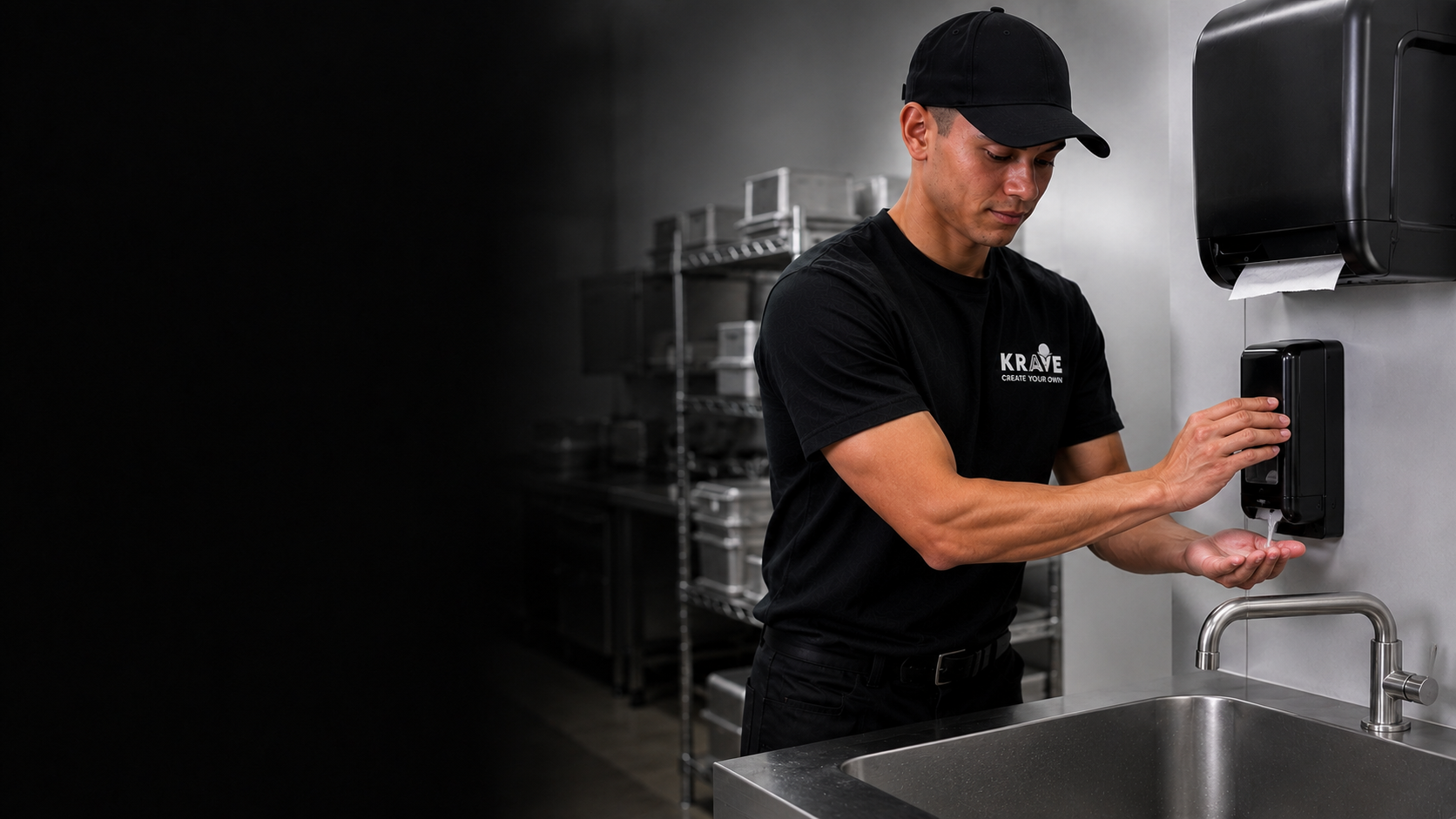
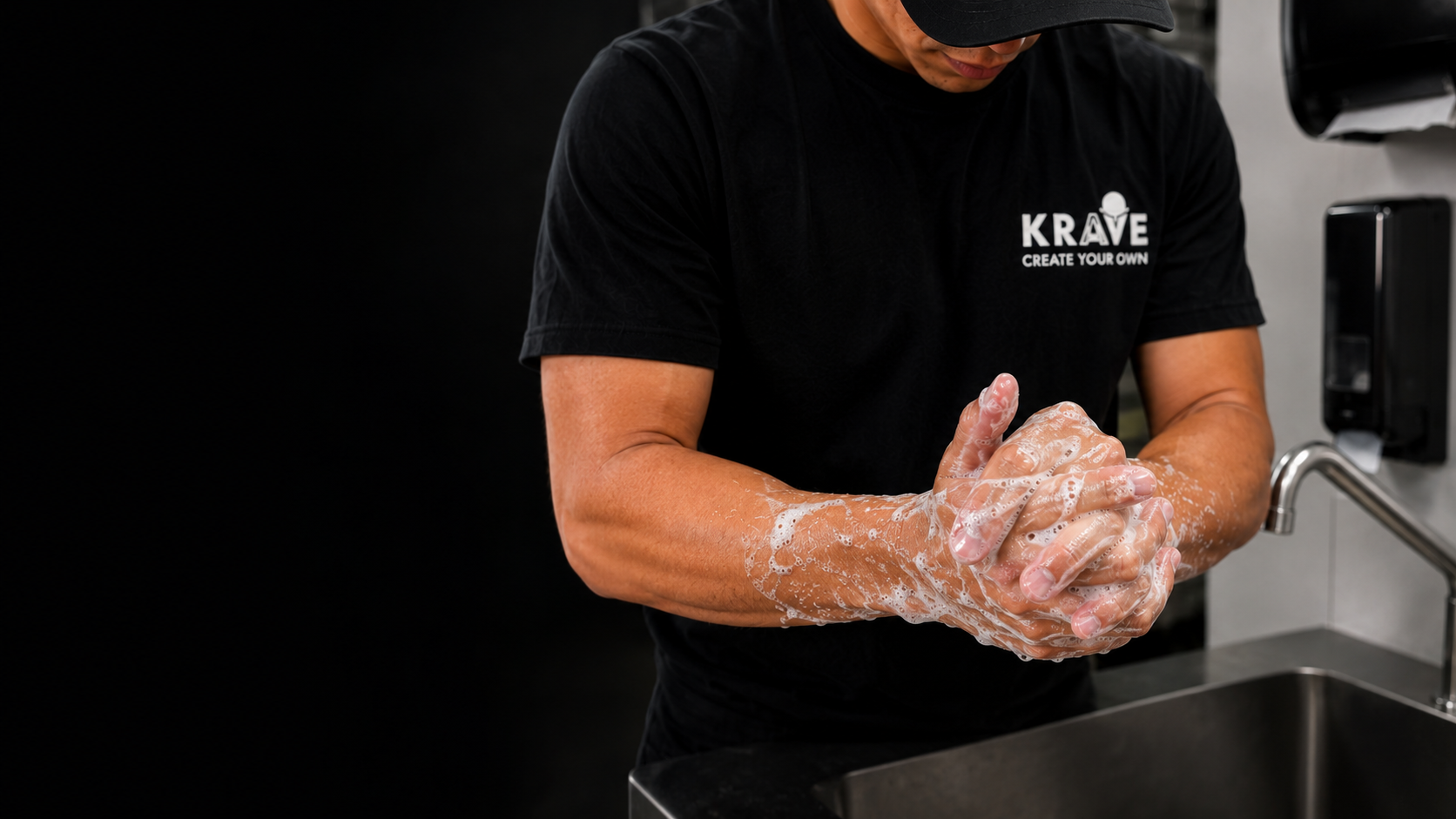
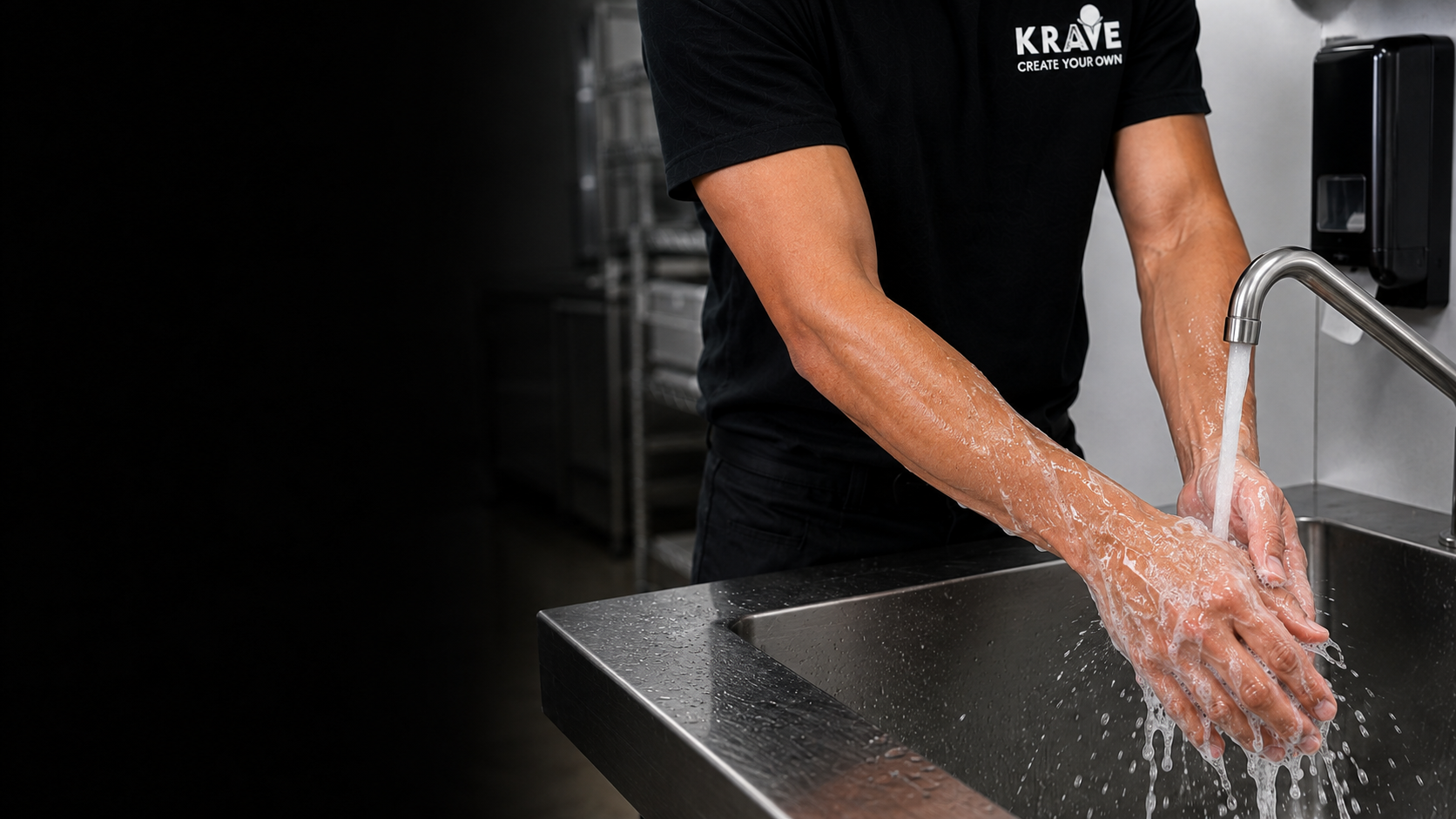
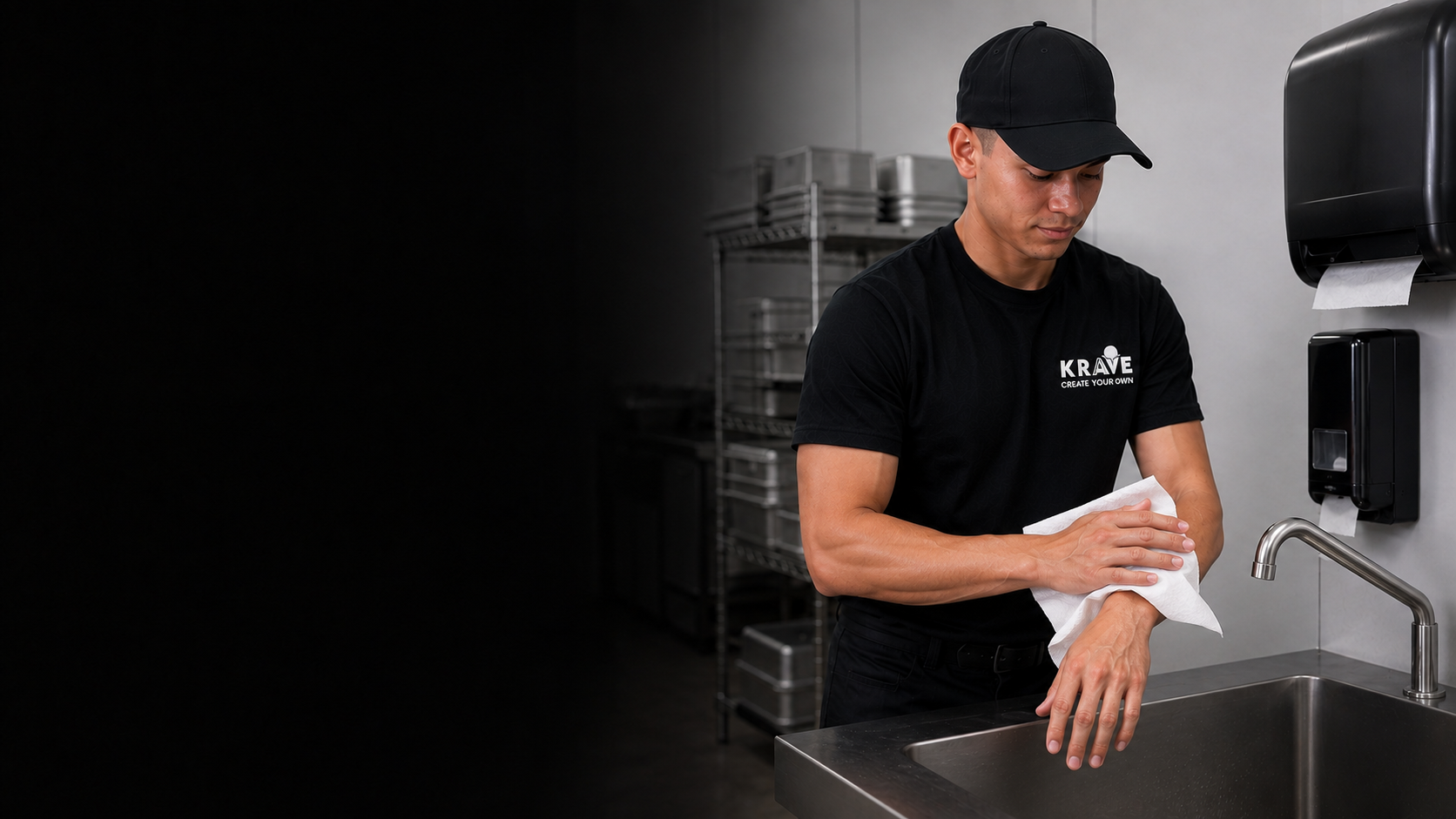
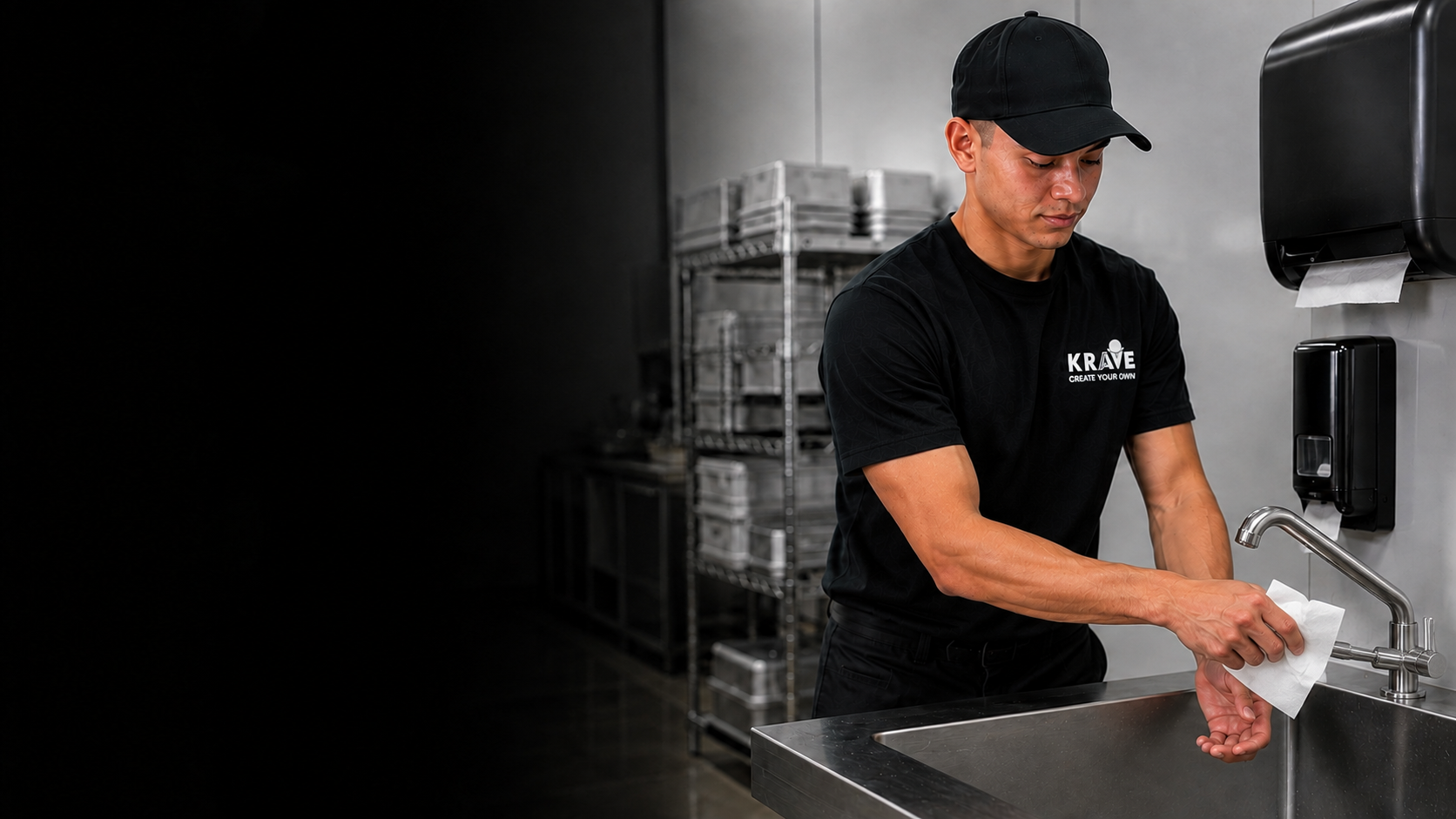
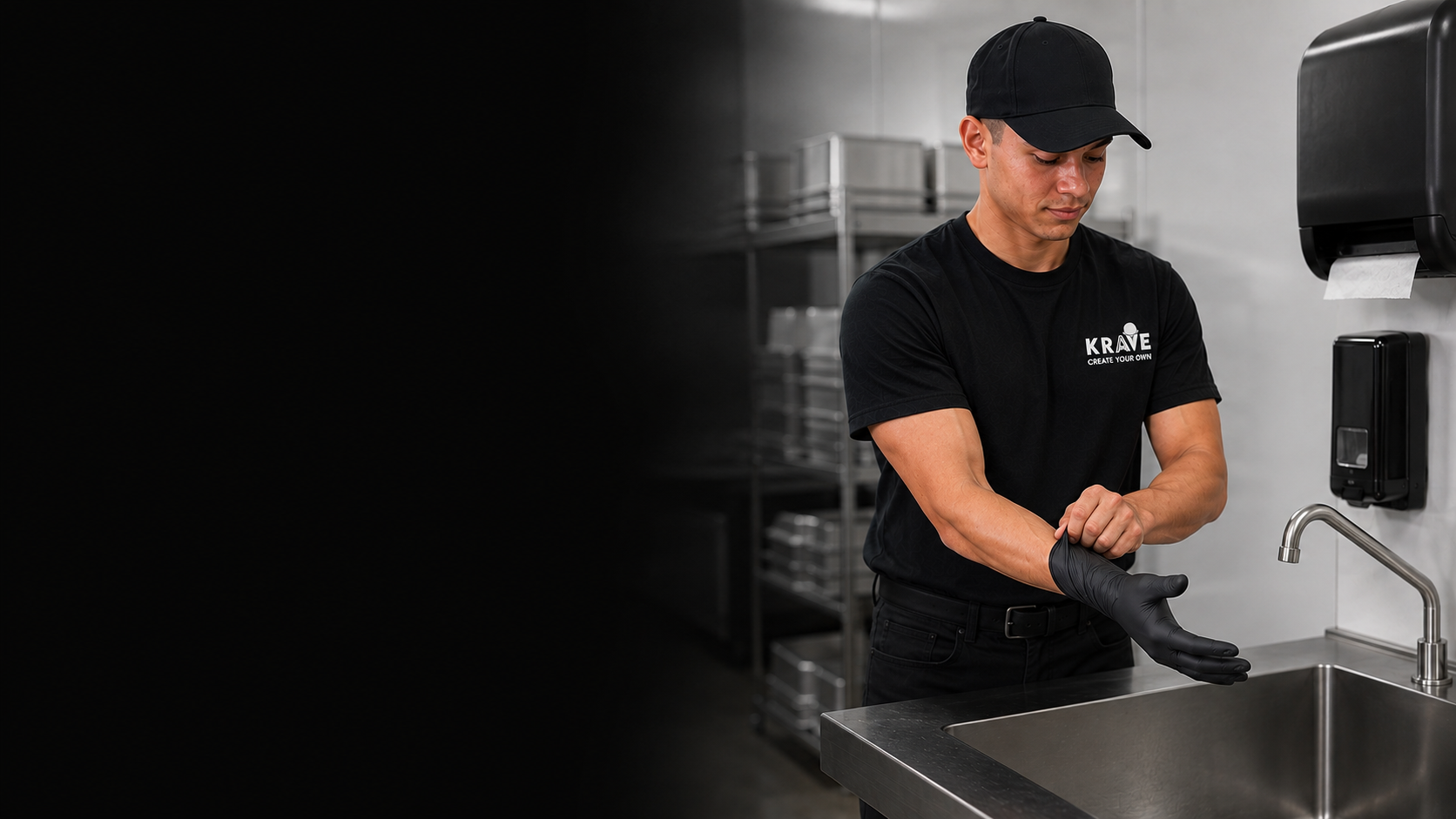
Proper handwashing protects food, guests, and every surface you touch.
Use warm running water.
Rub your hands together until fully lathered.
Scrub for at least 20 seconds—including fingertips, between fingers, and underneath fingernails.
Use warm running water.
Use a clean paper towel or approved hand dryer.
If the faucet is not touchless, use the paper towel to turn it off.
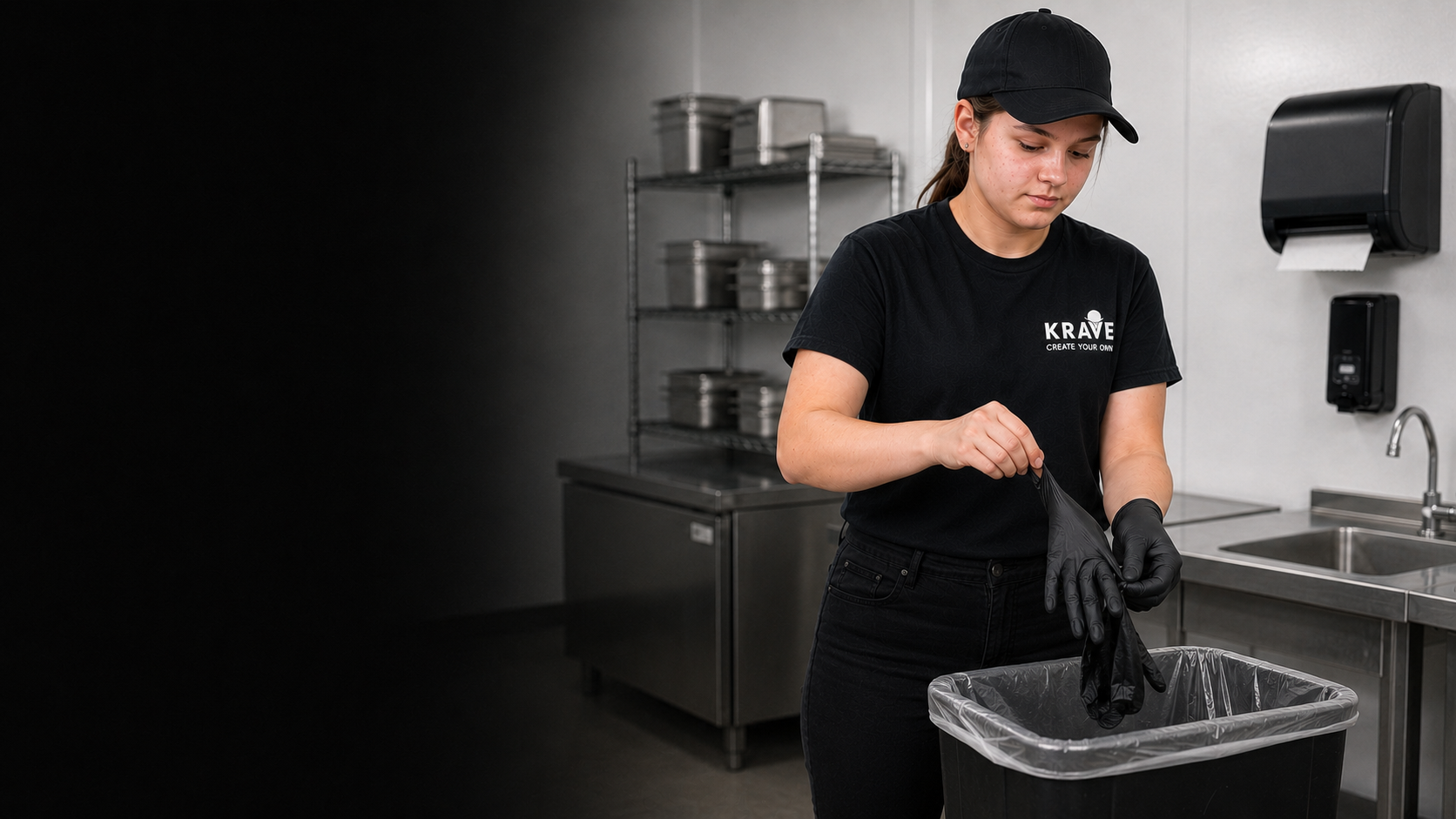
Every pair of gloves begins with clean hands.
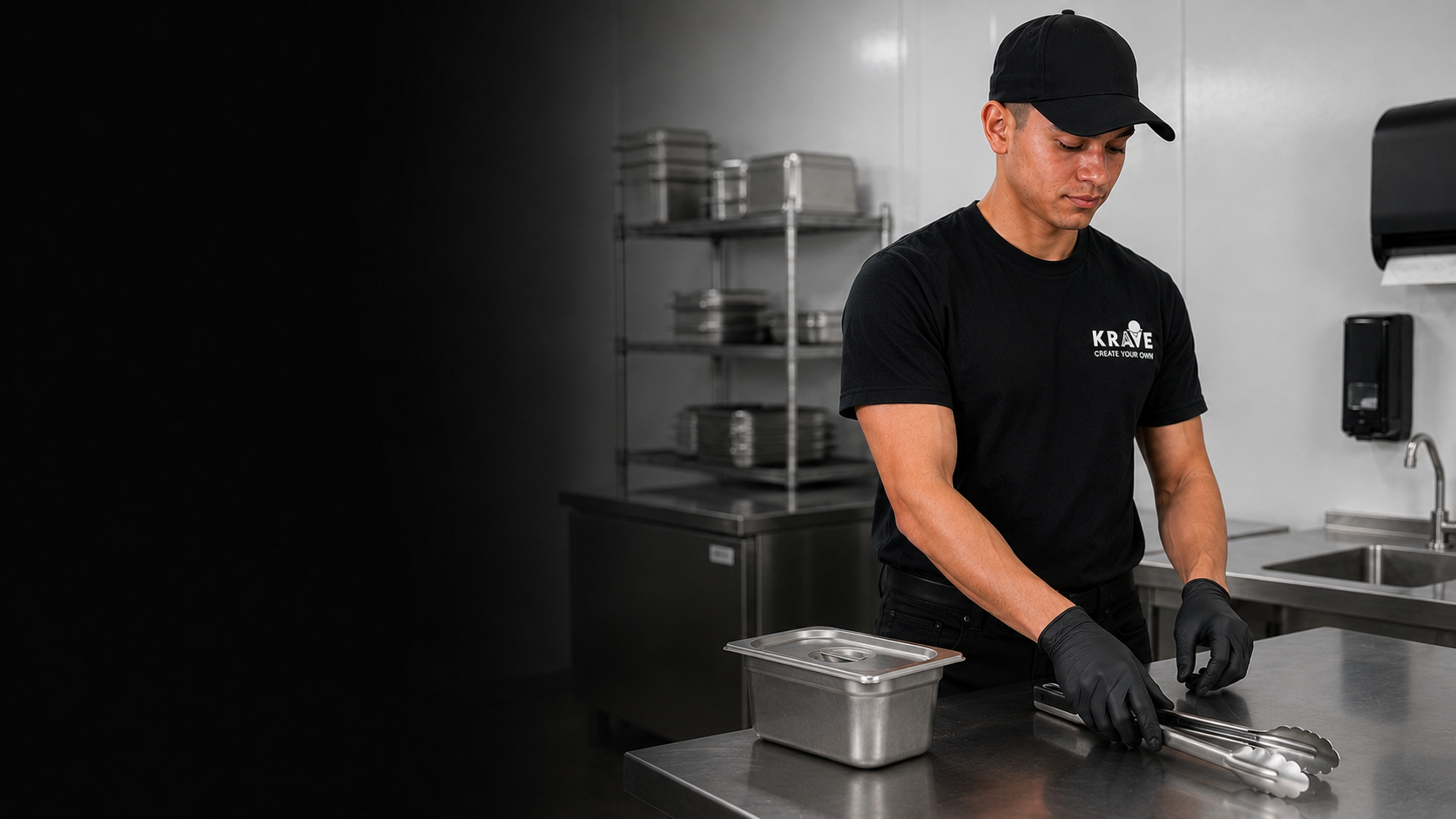
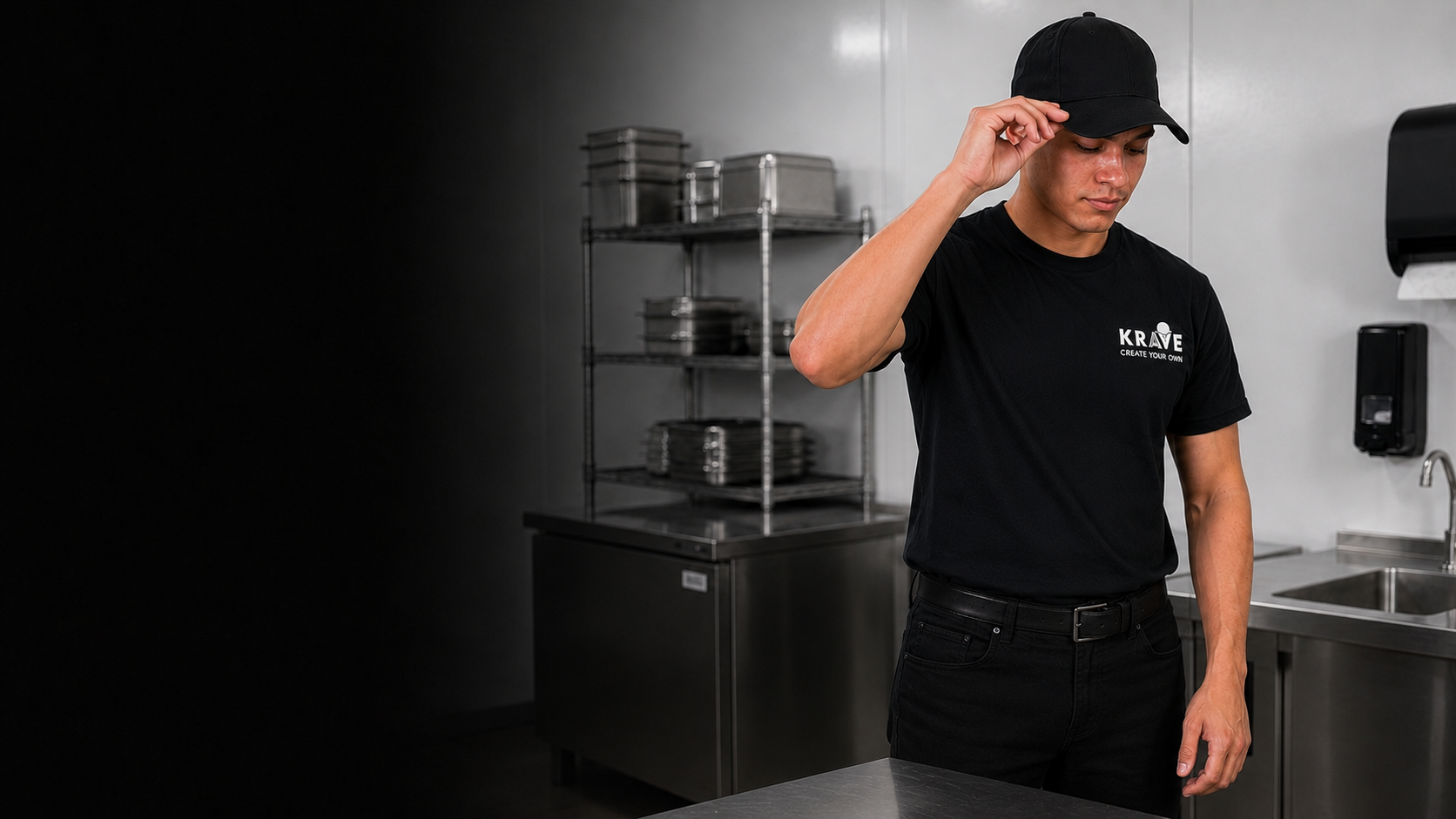
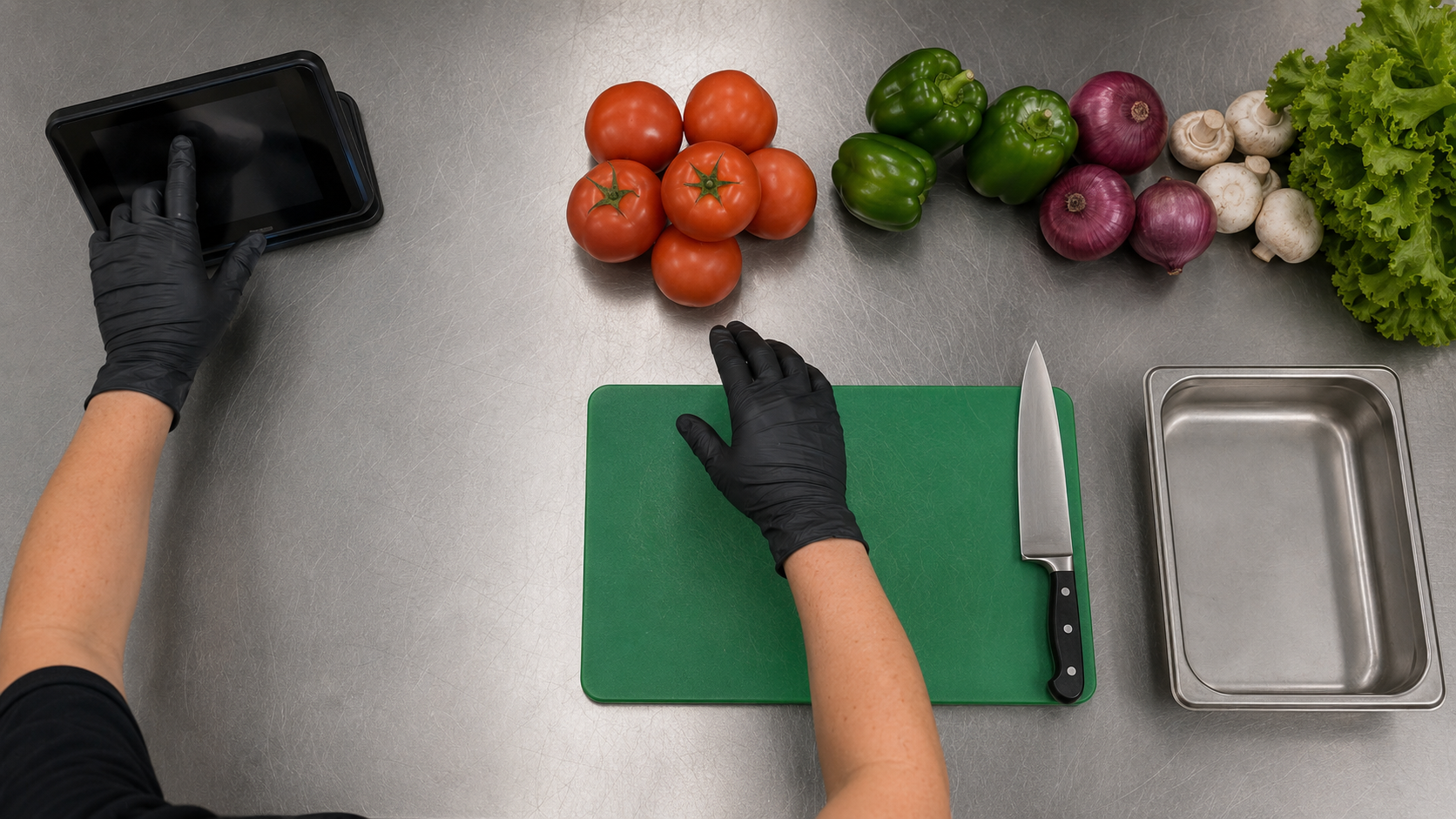
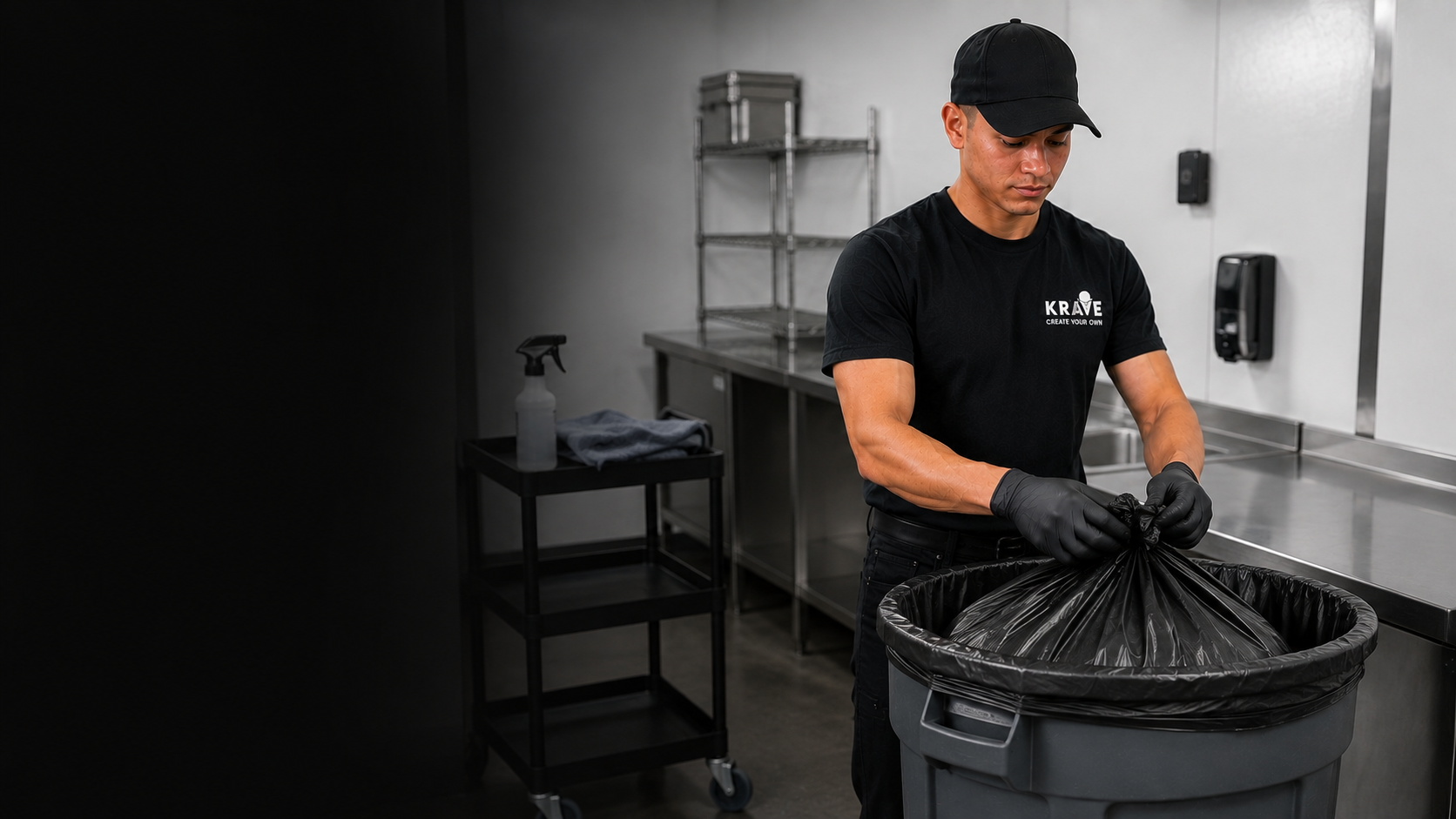

Clean hands protect the order only until the next contaminating touch.
Ask: Are my hands still clean?
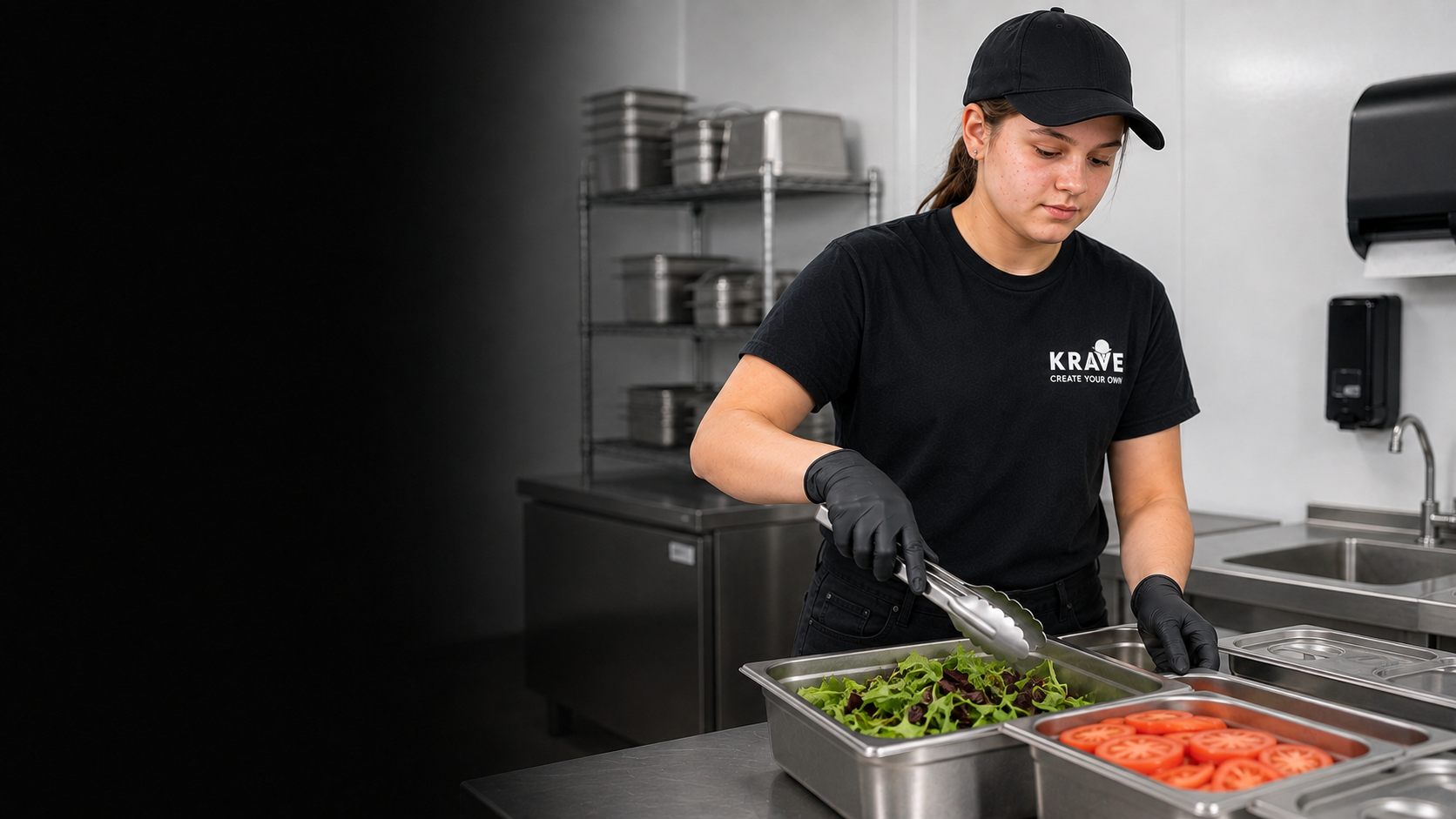
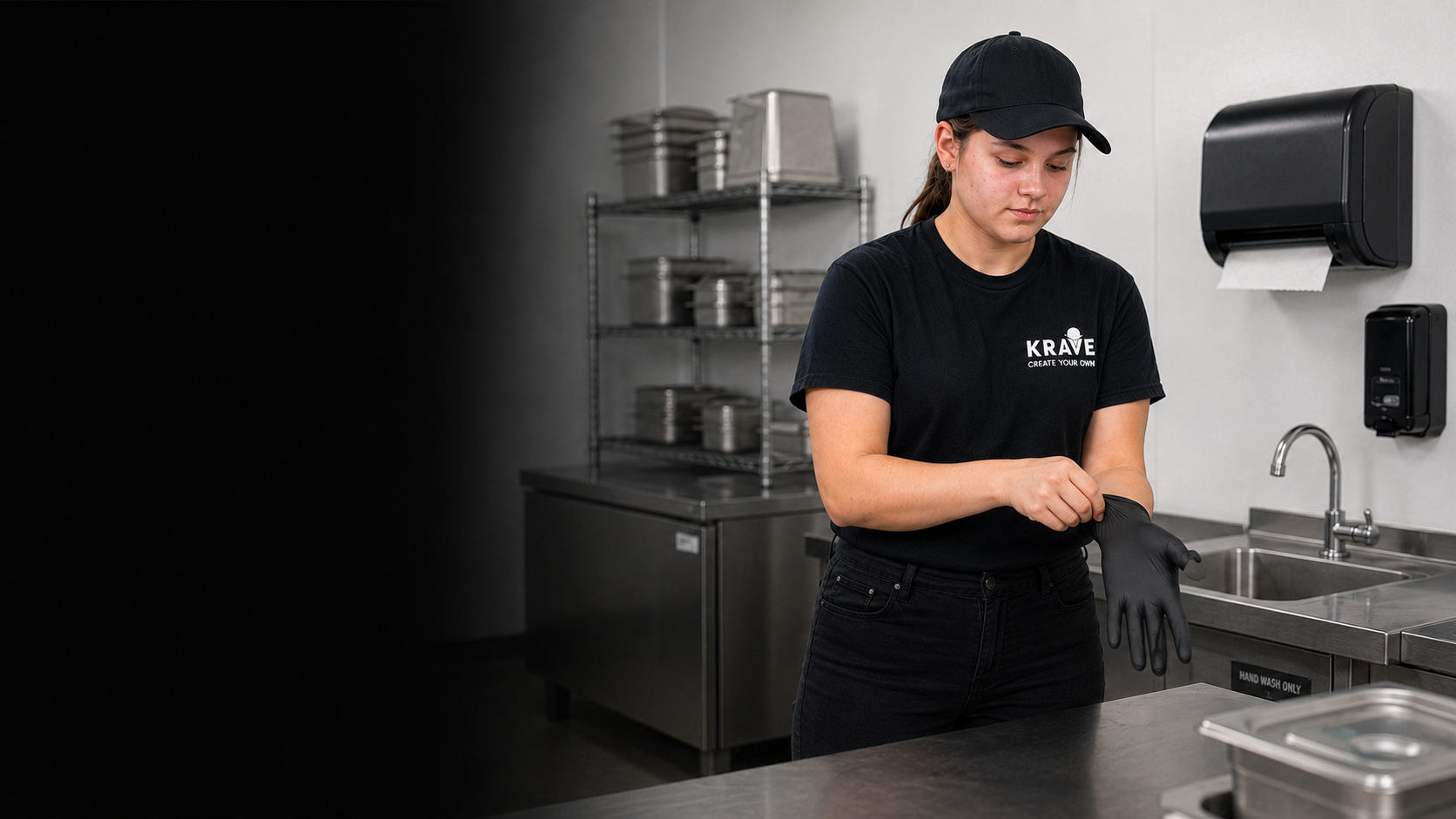
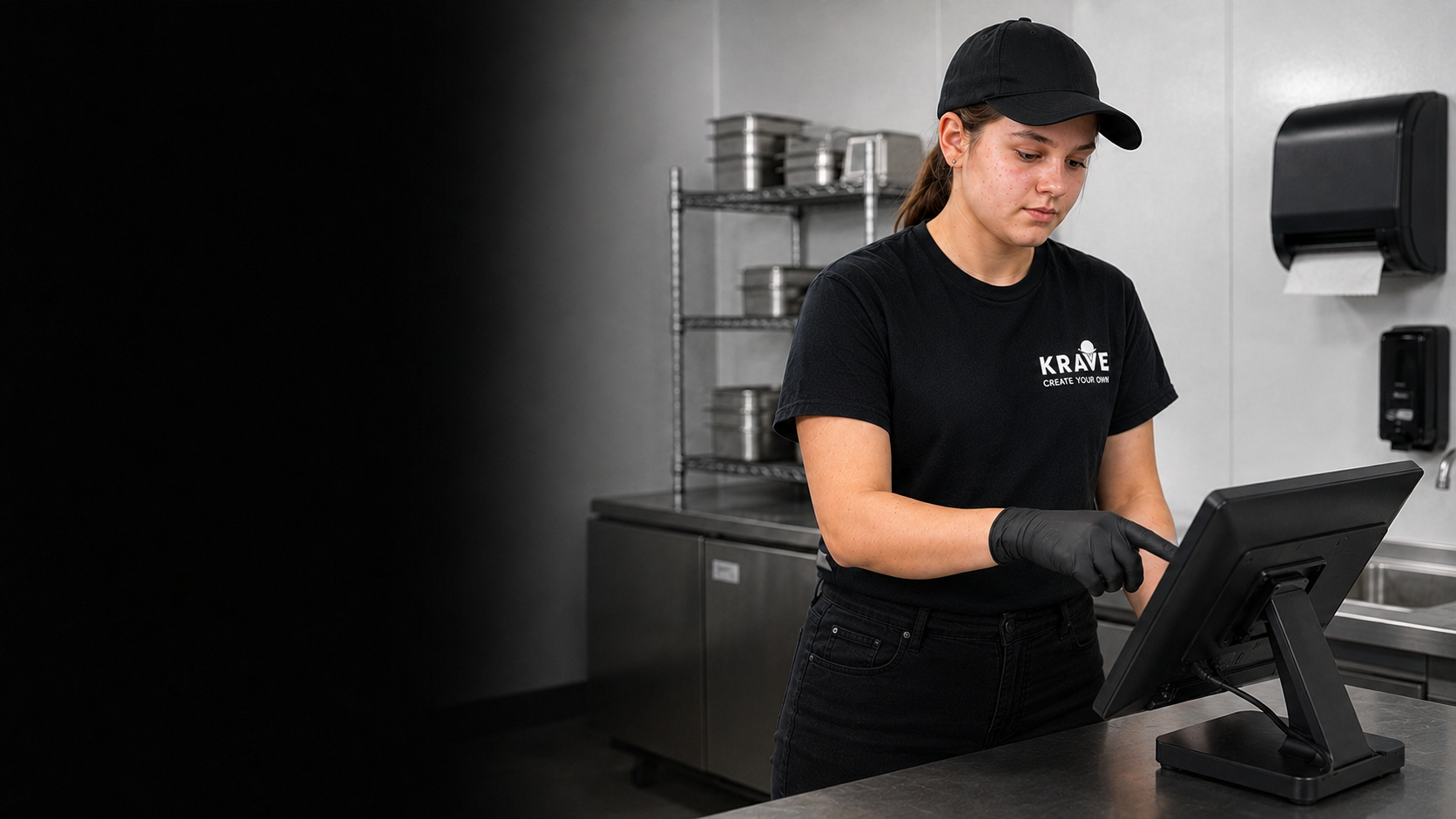
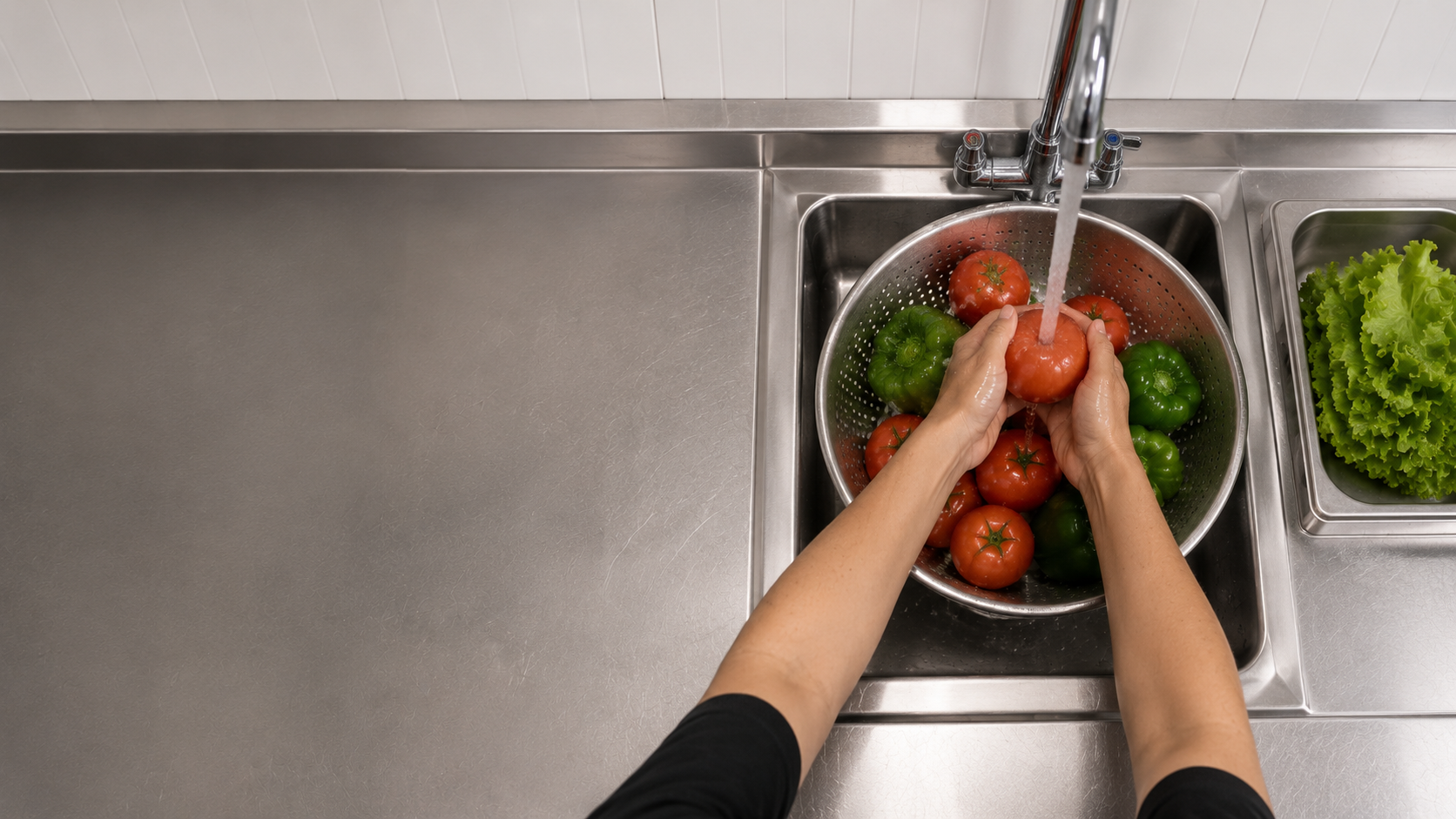
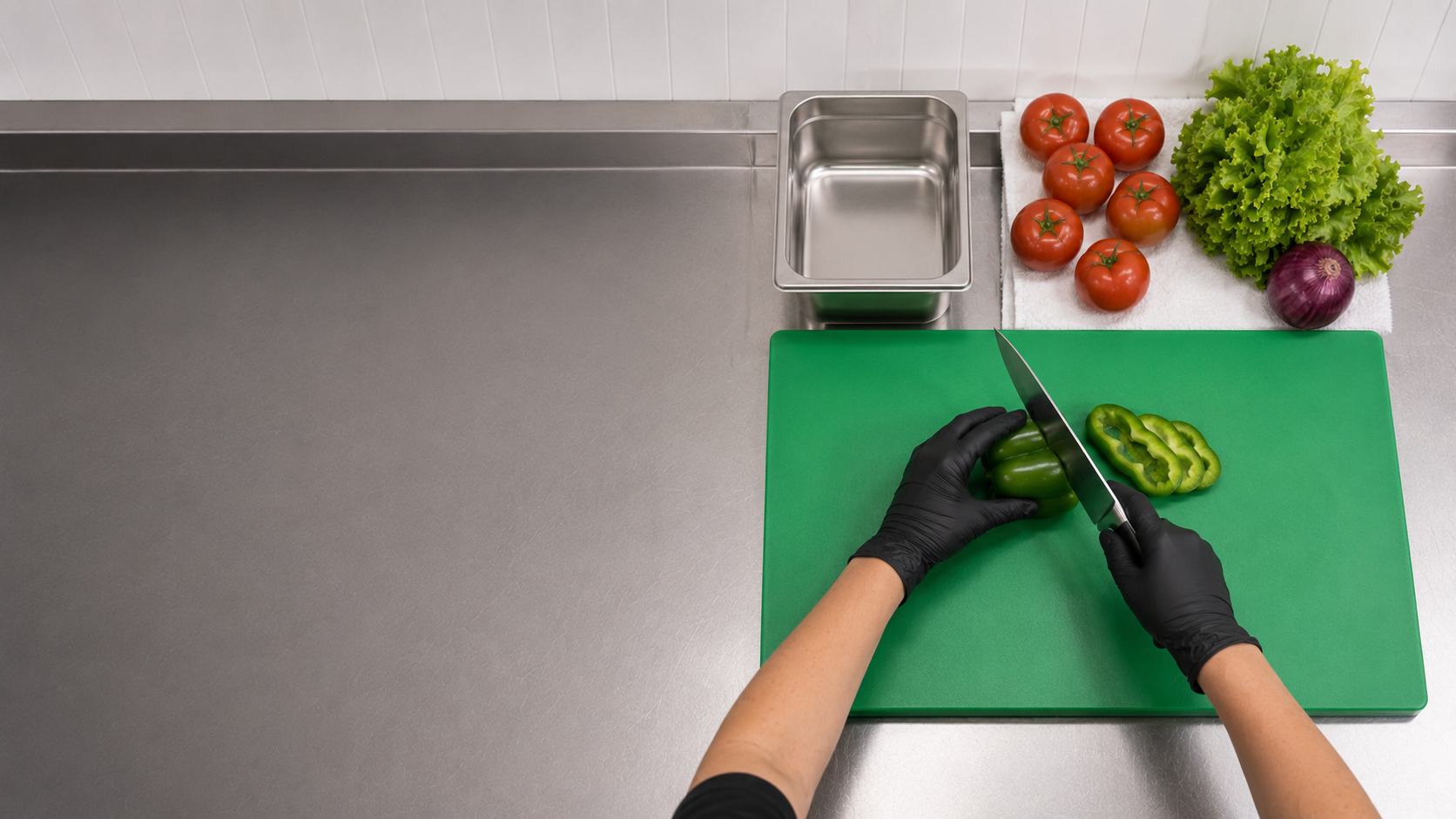
Harmful germs can move from hands, gloves, equipment, or one surface to food or another clean surface.
Krave does not handle raw meat, poultry, or seafood. Focus on the contamination risks that actually occur in our kitchens.
No soap · No detergent · No chemical cleaners
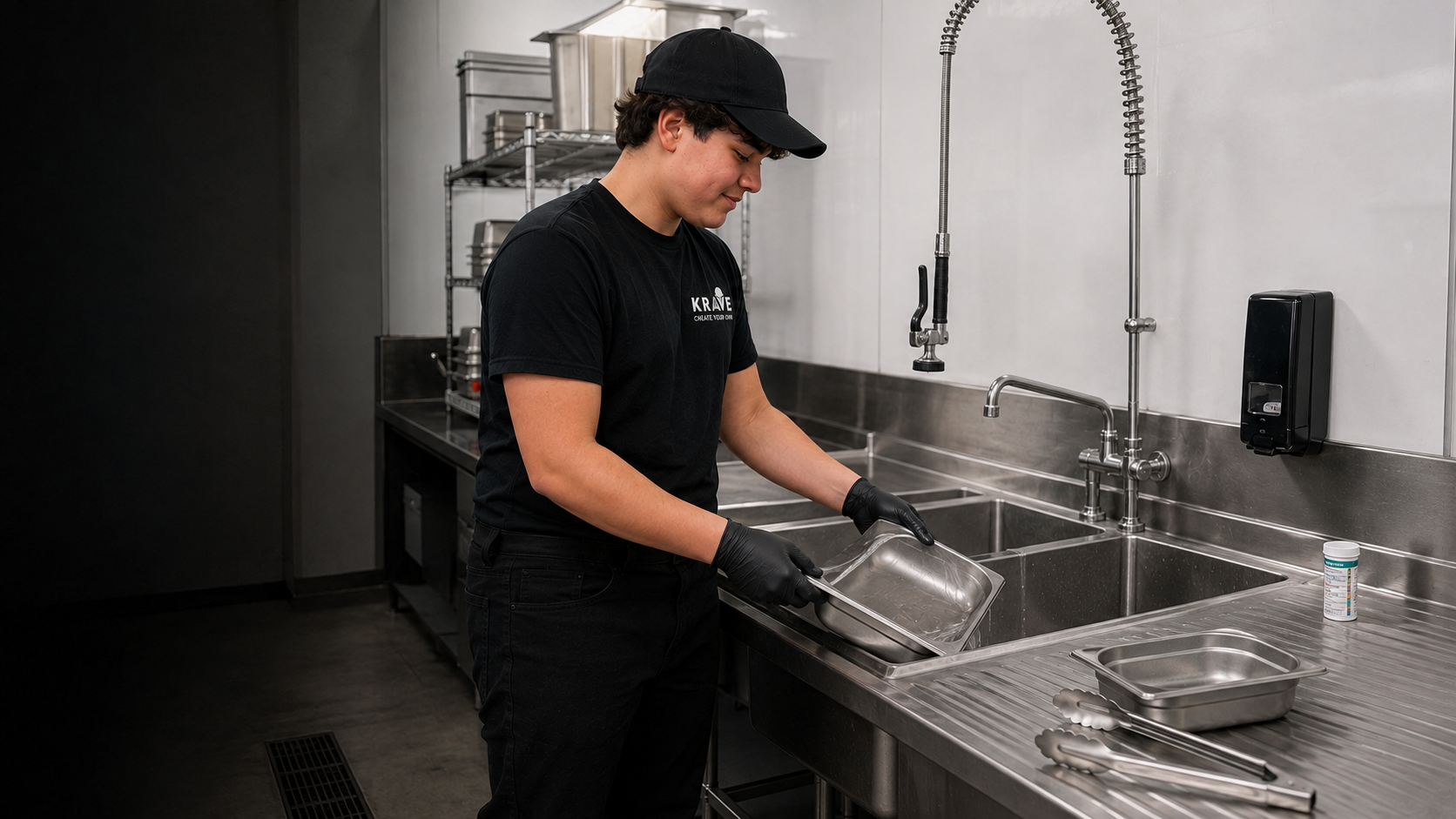
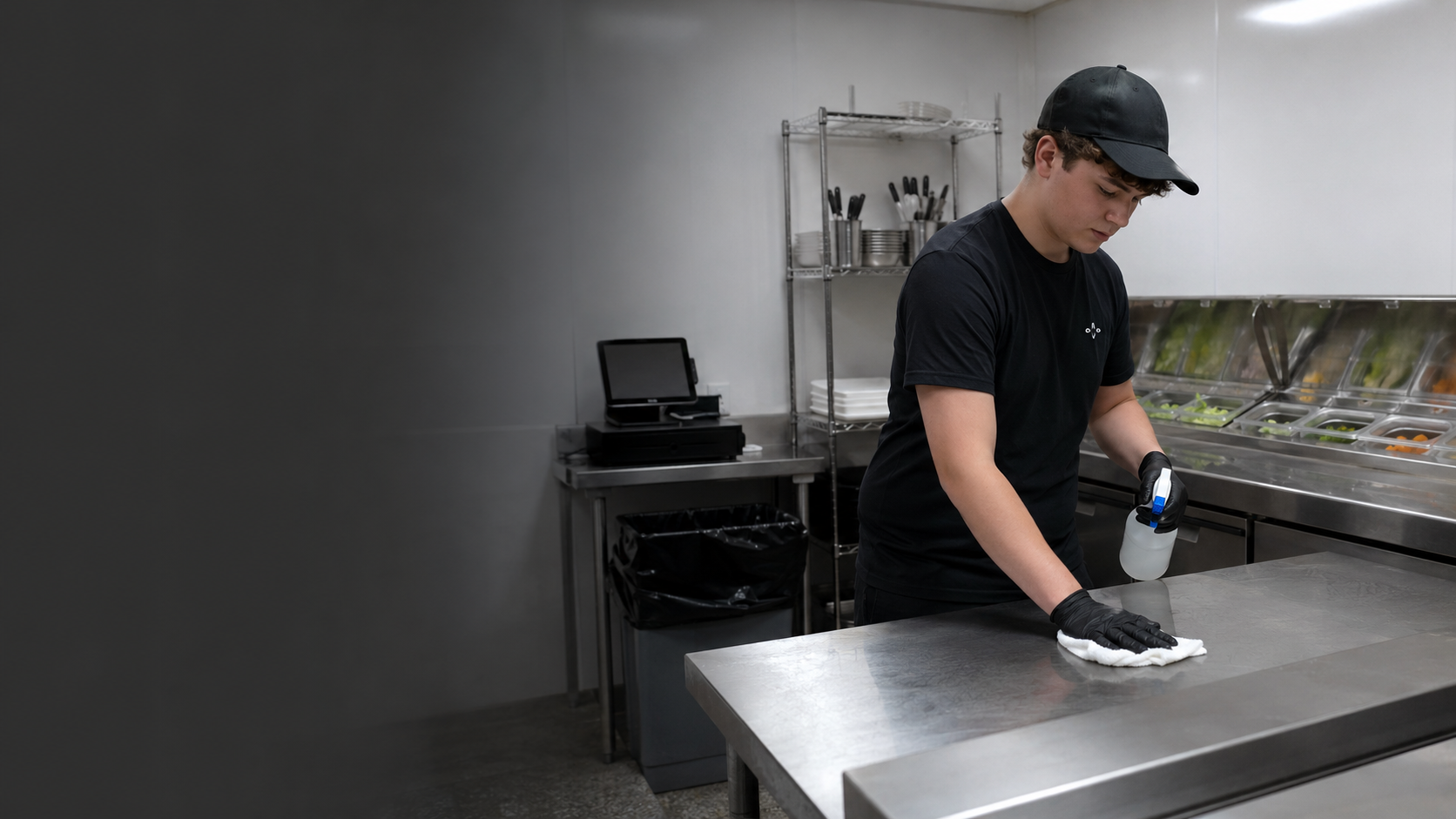
A surface must first lose the visible soil—then receive the sanitation step that prepares it for food contact.
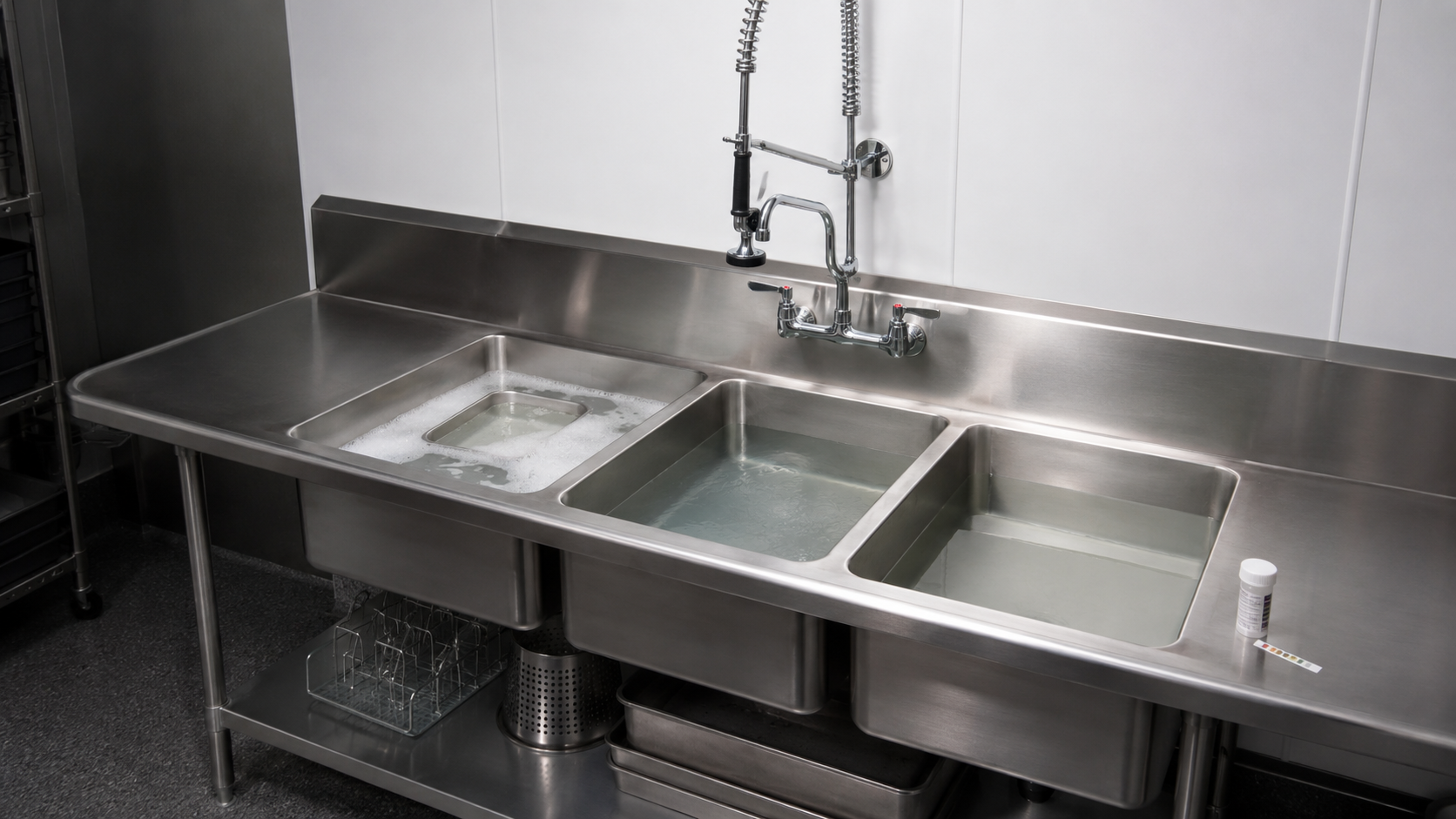
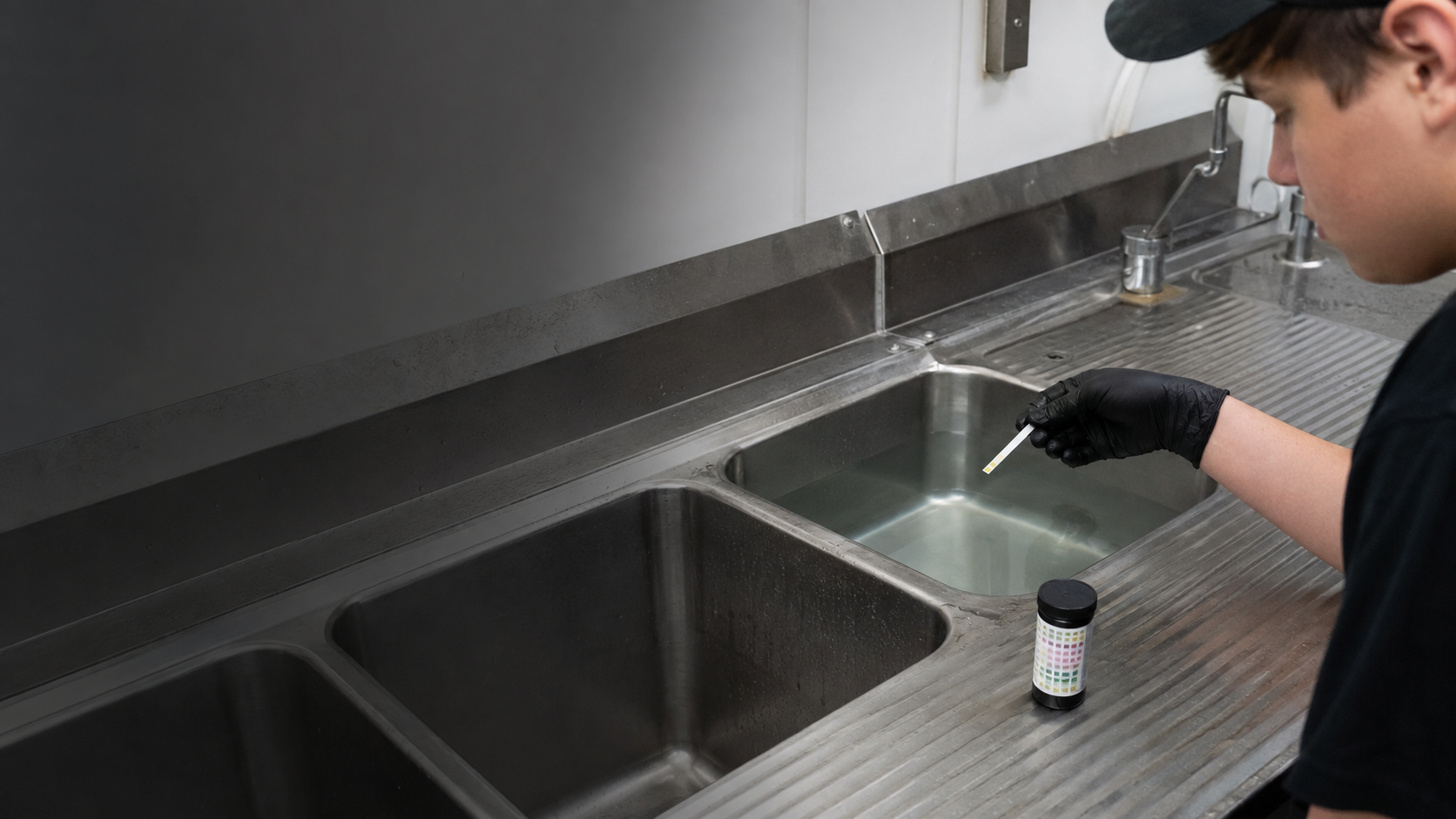
Use the approved sanitizer and correct test strip for the product at your location.
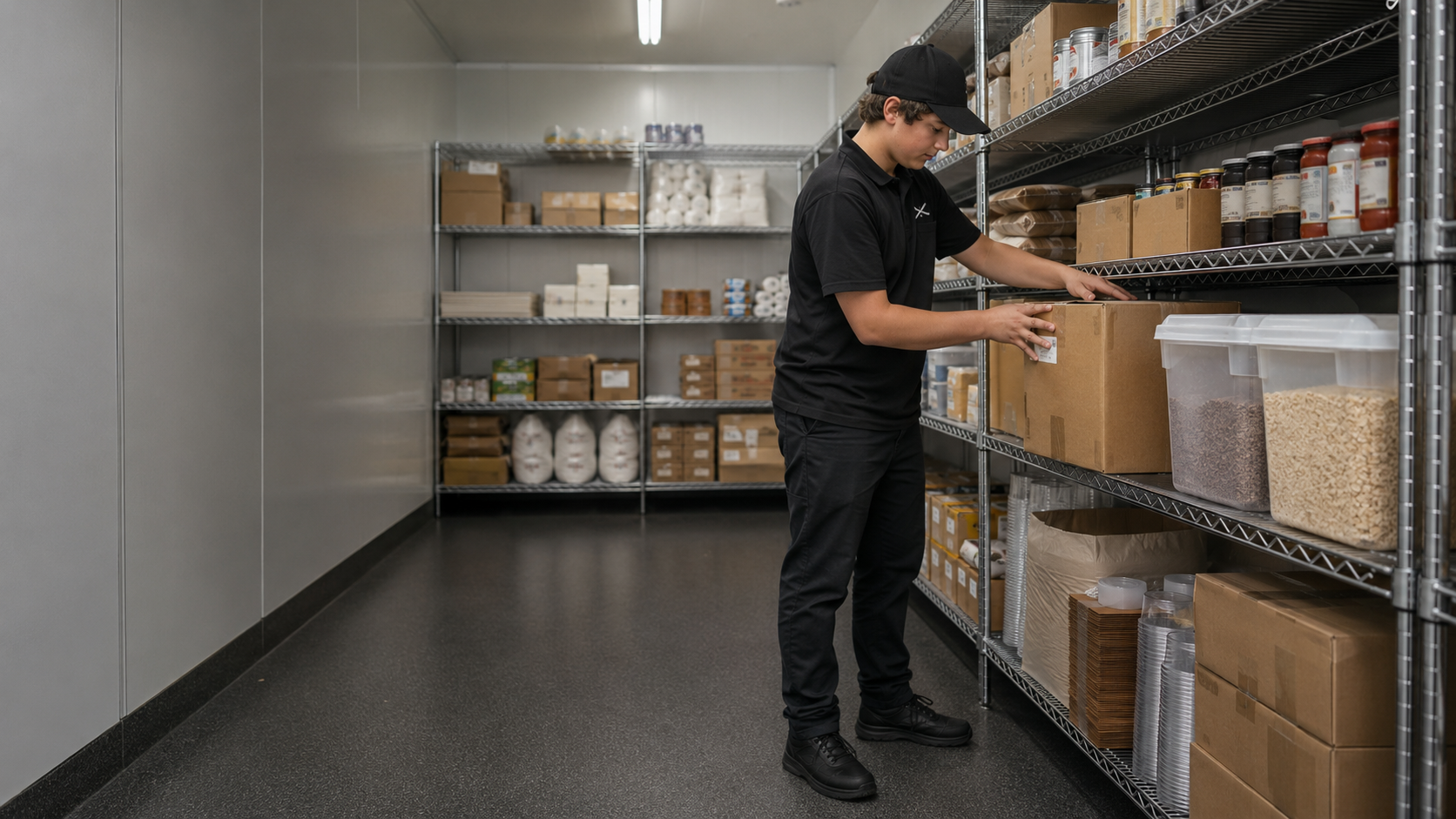
Dry storage must remain clean, cool, dry, and protected from conditions that damage food.
Required clearances protect food and keep hidden areas accessible.
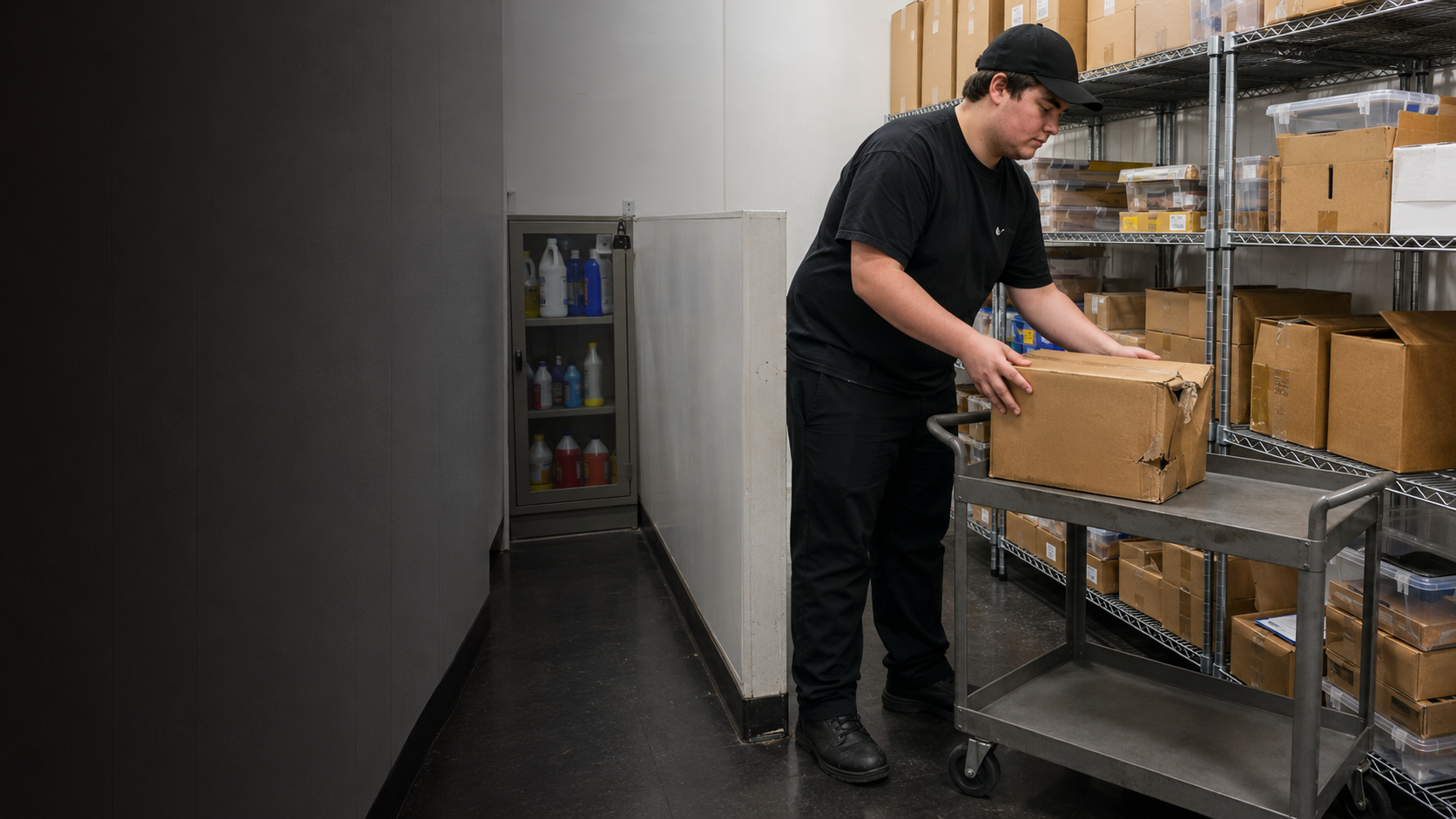
Check dates, packaging condition, and any sign that the product may be unsafe or damaged.
Non-food items require a physical barrier from stored food.
Small warning signs become larger problems when they are ignored.
The storage decision you make today affects the food the guest receives later.
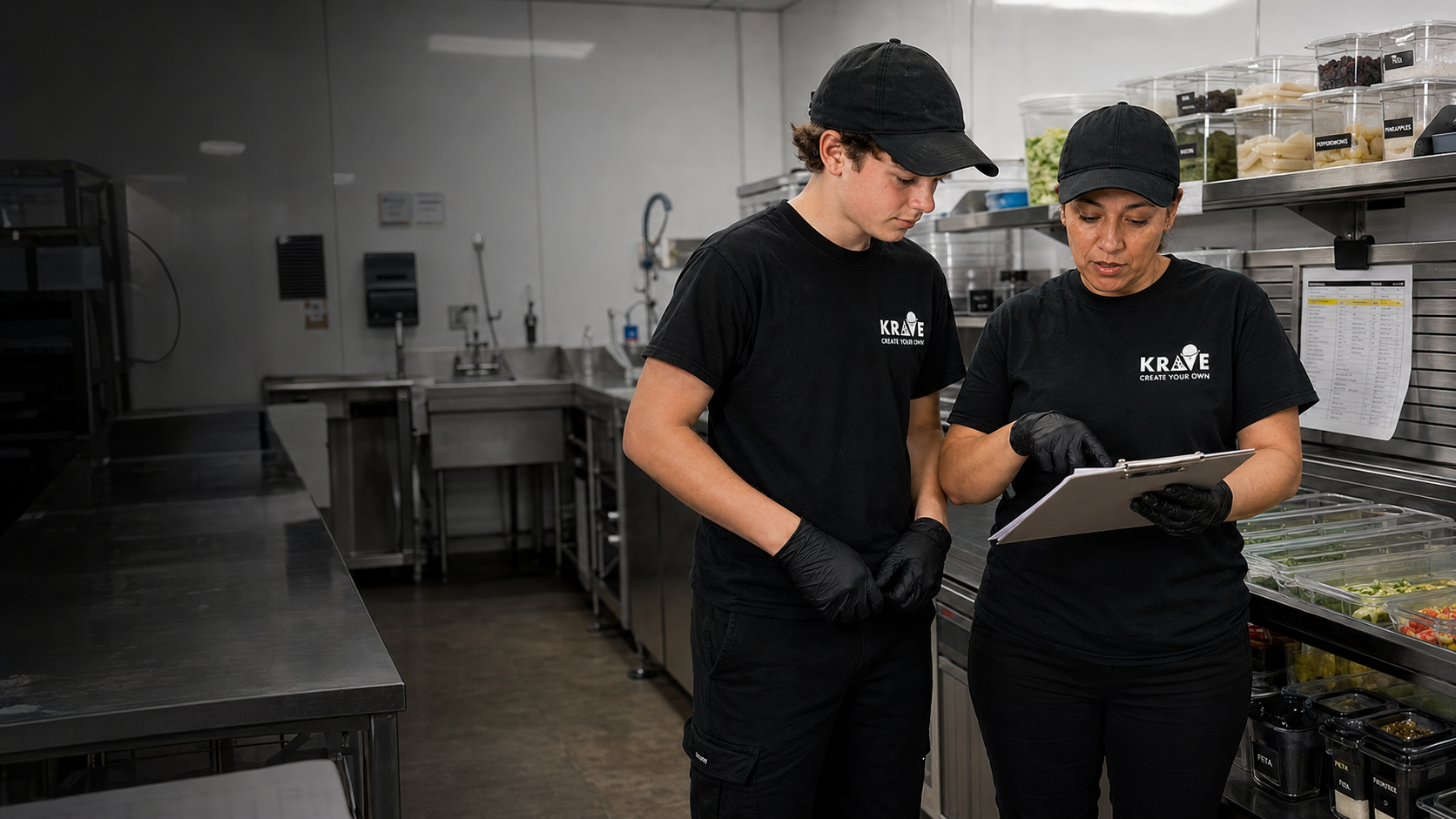
Every recipe, order, and guest experience depends on food being handled safely first.
Use today’s in-shift training to turn each standard into a dependable habit.
The foundation stays in place as training becomes more involved with recipes, preparation, consistency, serving items, and completed orders.